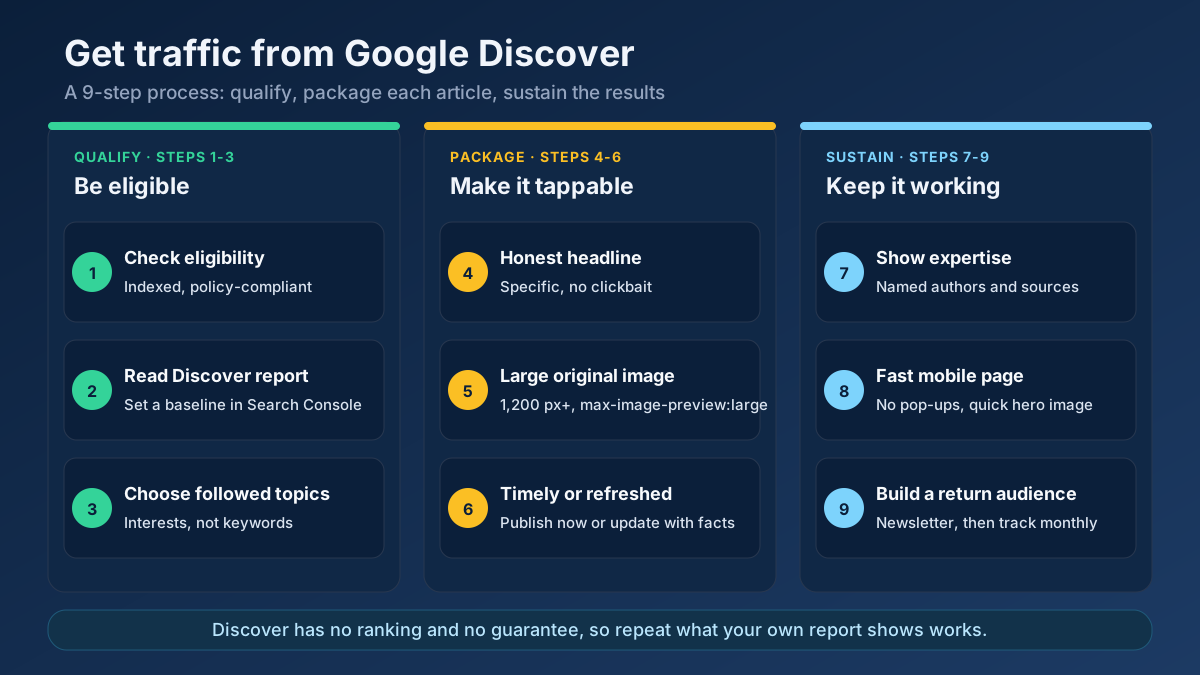
How to Get Traffic from Google Discover: 9 Steps
Learn how to get traffic from Google Discover: check eligibility, fix images and headlines, choose topics and read the report to repeat what works.
Read article →Actionable, up-to-date guides on keyword research, technical SEO, link building and content — written around the tools you use here.
 Content
Learn how to get traffic from Google Discover: check eligibility, fix images and headlines, choose topics and read the report to repeat what works.
Read article →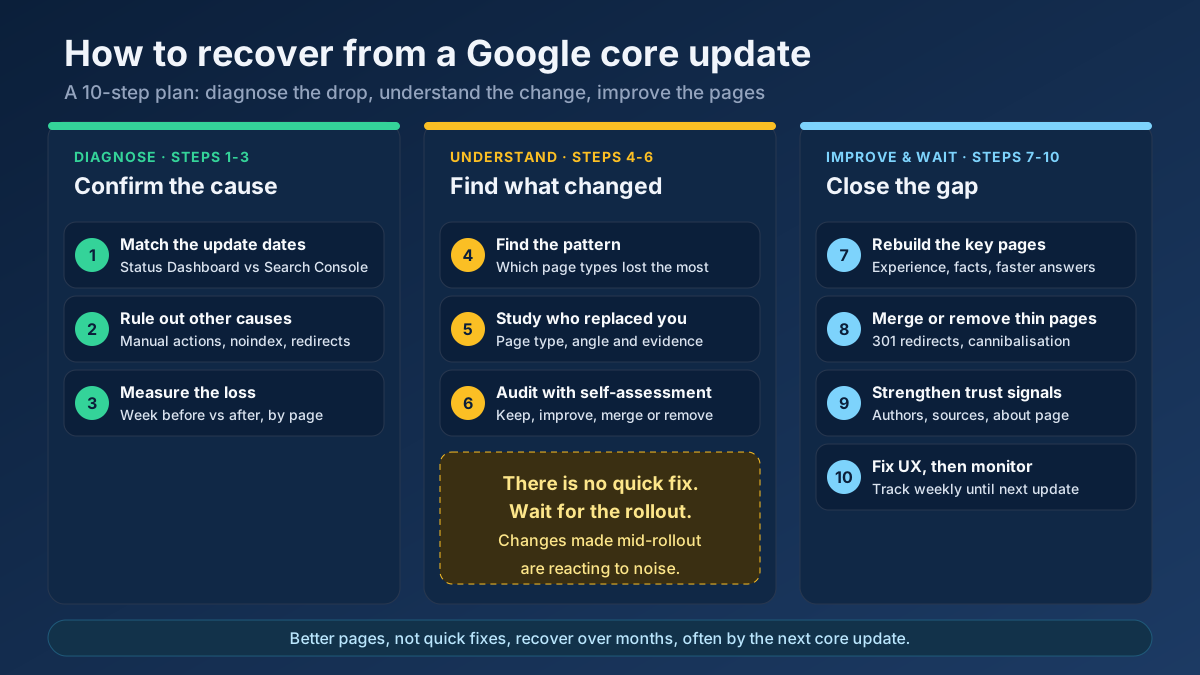 Analytics
Learn how to recover from a Google core update: confirm the drop, rule out technical issues, find the pages that lost and rebuild them in 10 clear steps.
Read article →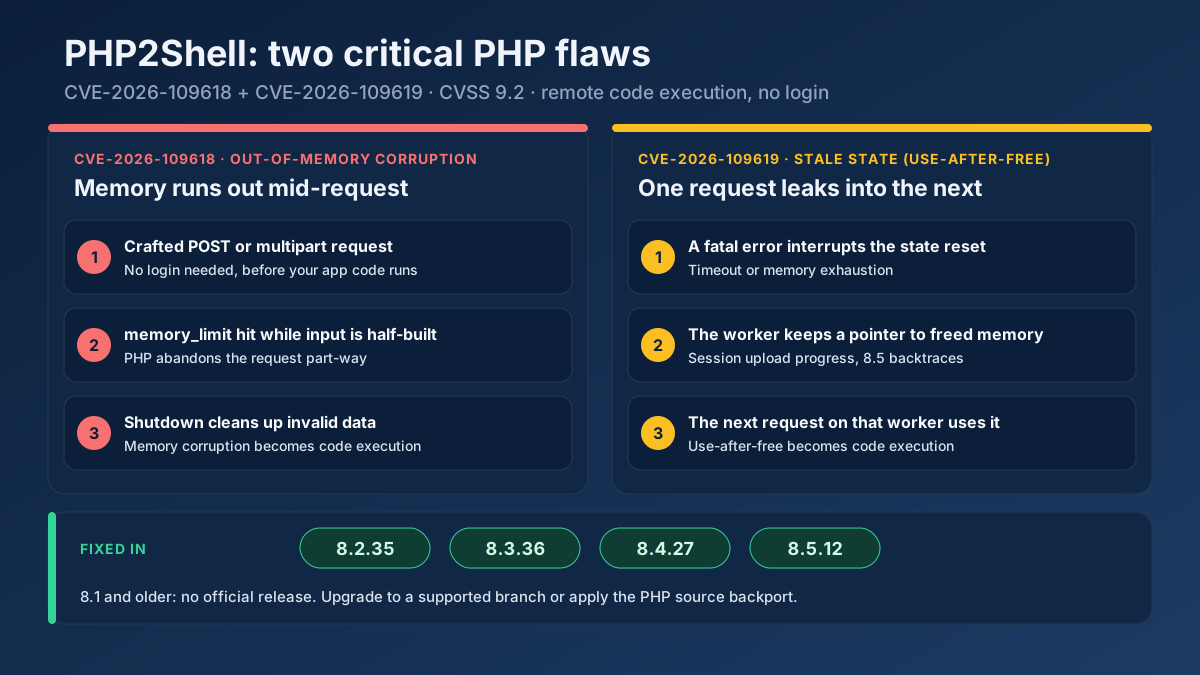 Technical SEO
PHP2Shell (CVE-2026-109618, CVE-2026-109619) lets attackers run code on PHP servers. See which versions fix it, how to check your site and what to do today.
Read article →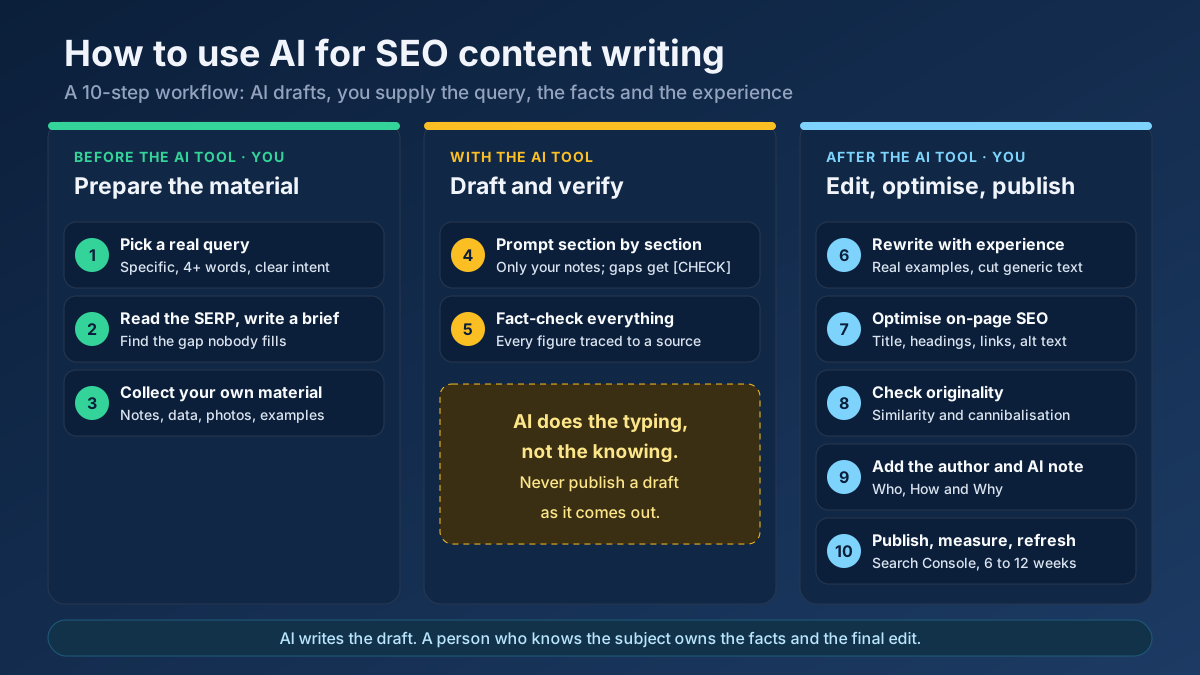 Content
Learn how to use AI for SEO content writing without risking a penalty: a 10-step workflow for briefs, drafts, fact-checks, editing and E-E-A-T signals.
Read article →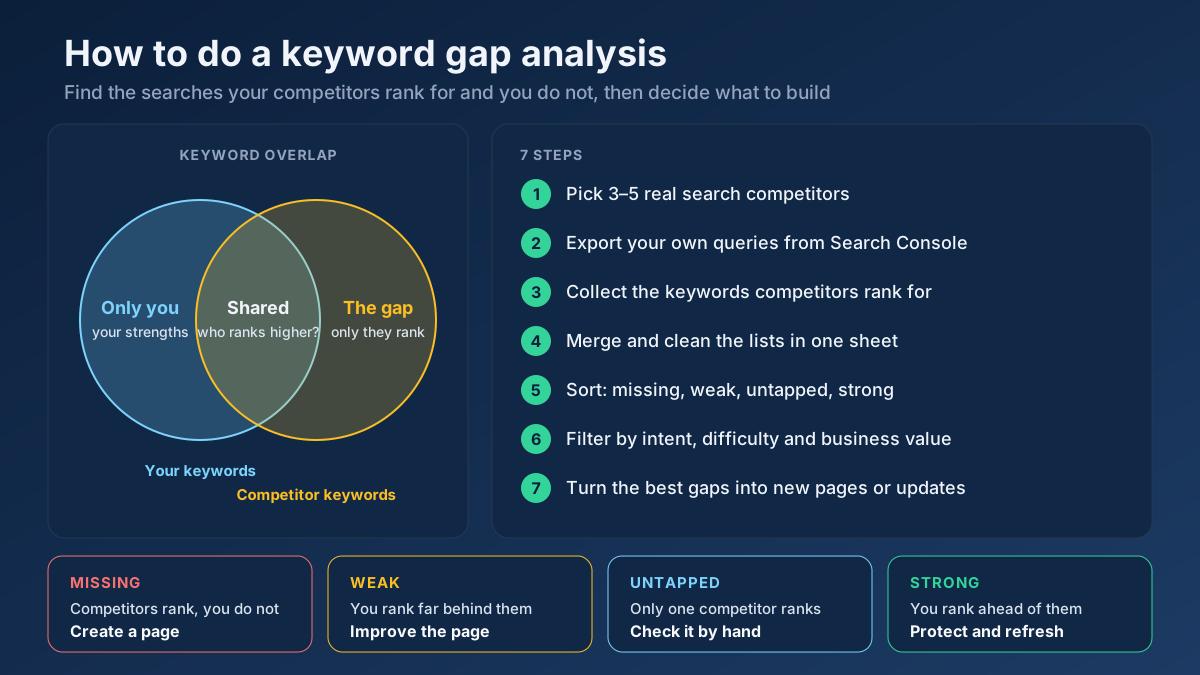 Keyword Research
Learn how to do a keyword gap analysis in 7 steps: find the keywords competitors rank for and you don’t, sort the gaps, then turn them into a content plan.
Read article →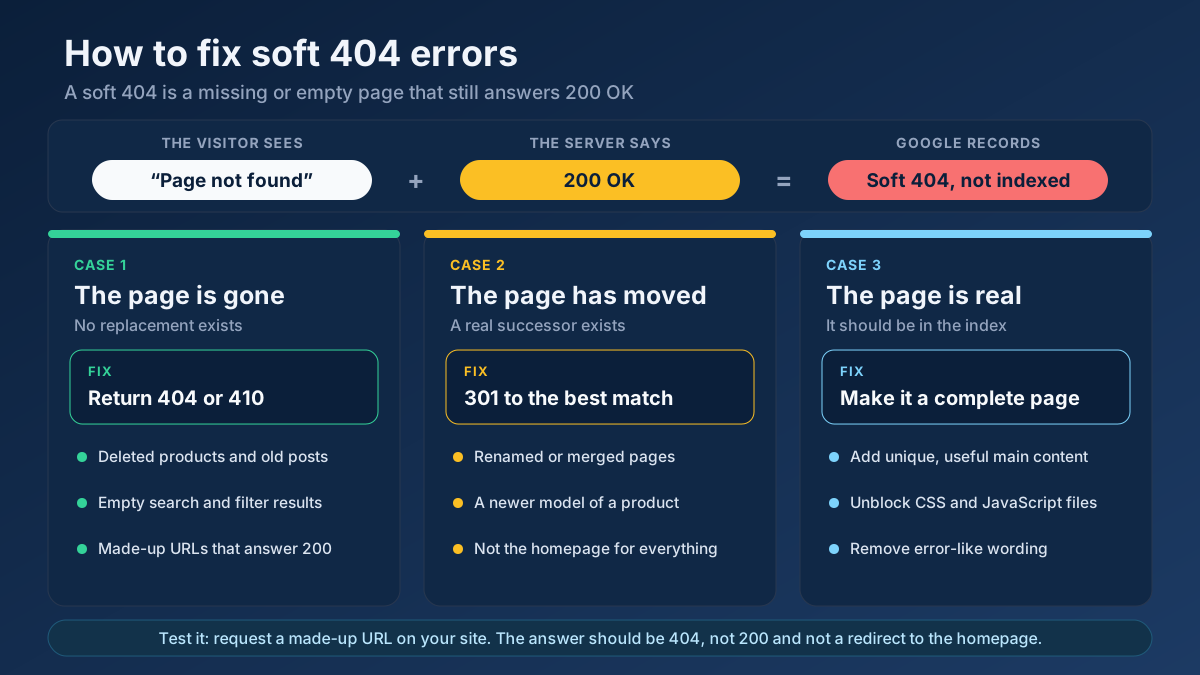 Technical SEO
Learn how to fix soft 404 errors in Google Search Console: find them, tell real ones from false alarms, then return a 404, add a 301 or improve the page.
Read article →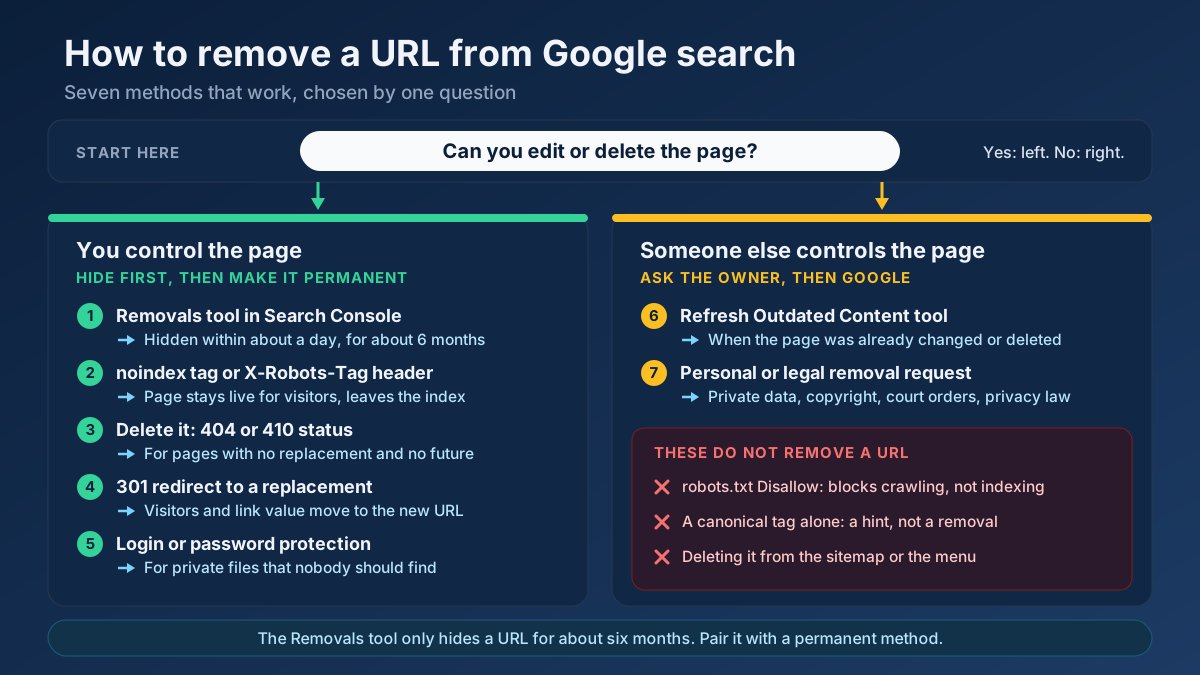 Technical SEO
Learn how to remove a URL from Google search results: hide it in a day with the Removals tool, then delete it for good with noindex, 404/410 or a redirect.
Read article →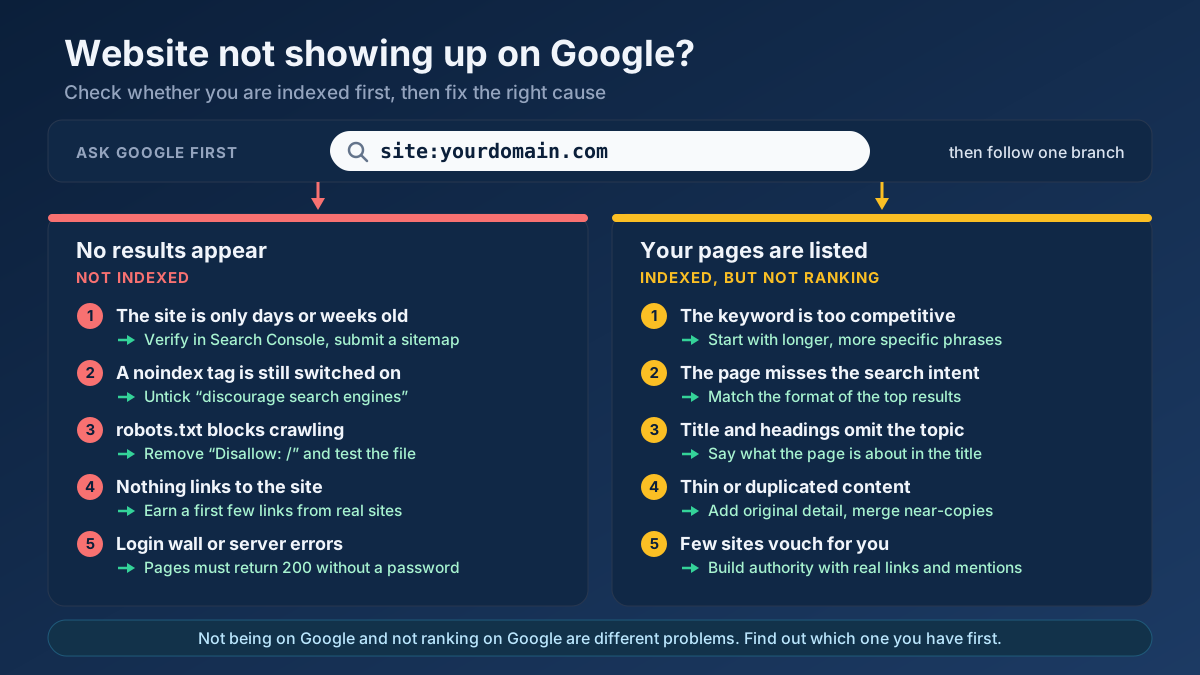 Technical SEO
Website not showing up on Google? Check if it is indexed in two minutes, then work through 12 causes and fixes, from a noindex tag to a brand-new domain.
Read article →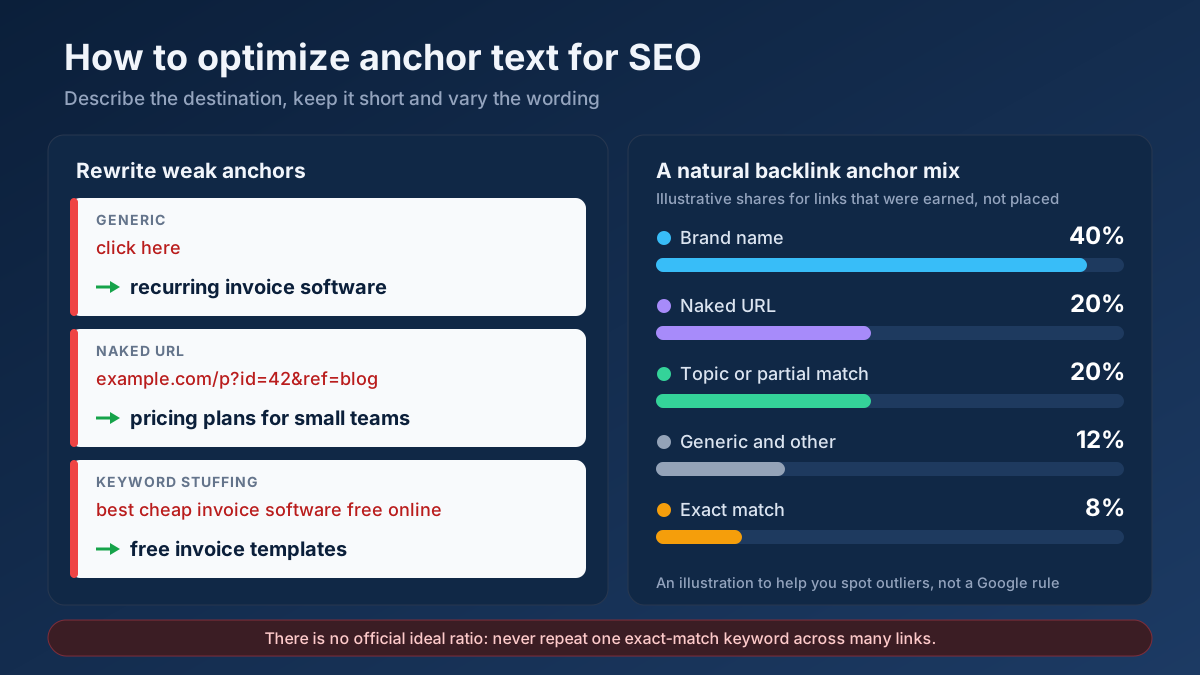 Link Building
How to optimize anchor text for SEO in 9 steps: anchor types, internal link and backlink rules, a natural ratio, rewrite examples and mistakes to avoid.
Read article →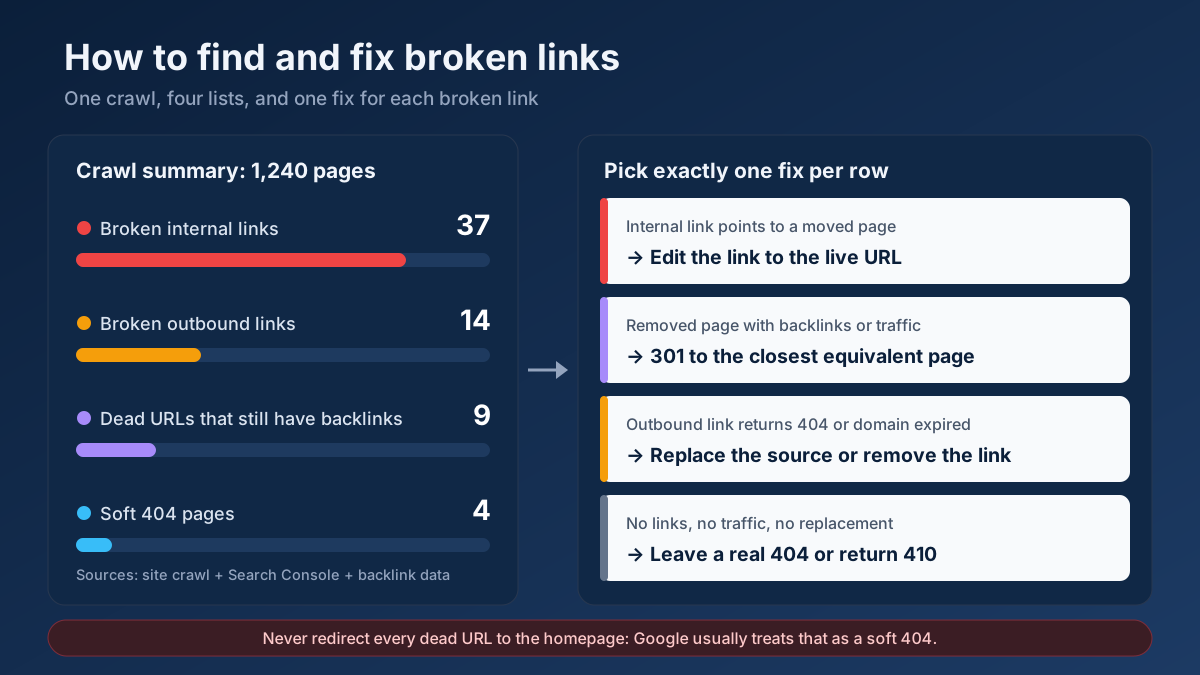 Technical SEO
How to find and fix broken links in 8 steps: crawl your site, check 404s and soft 404s in Search Console, recover lost backlinks and pick the right fix.
Read article →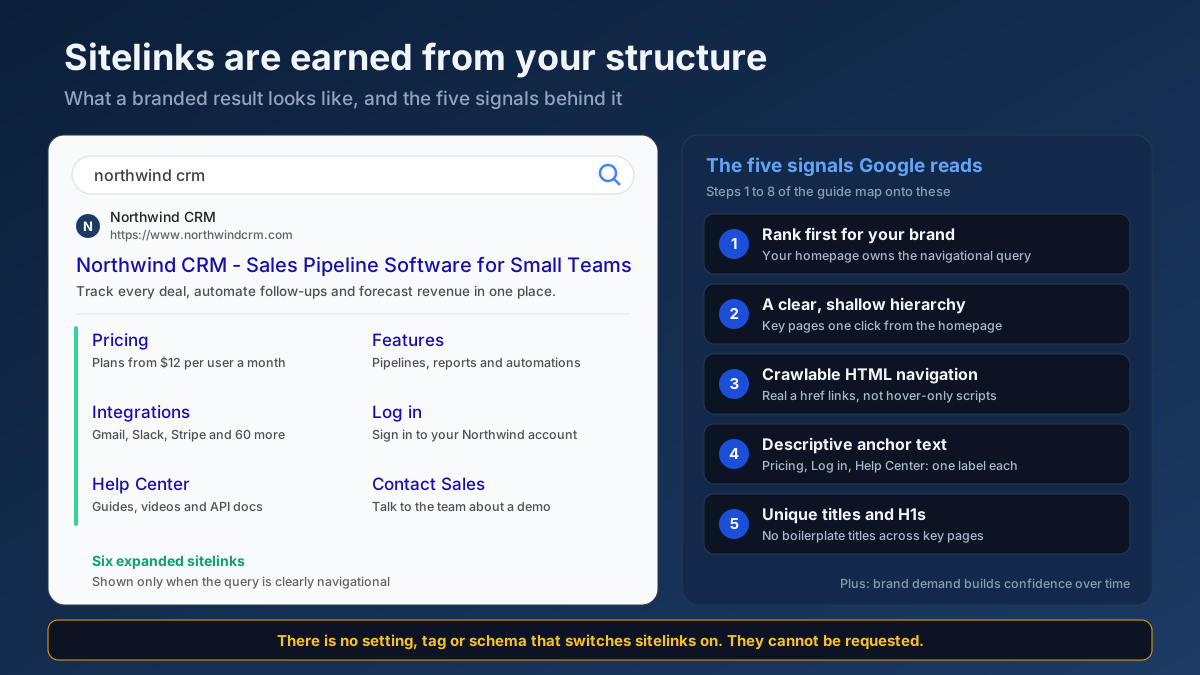 Technical SEO
How to get sitelinks in Google: 10 steps to earn them on your brand search, why sitelinks are not showing, and how to remove a sitelink you do not want.
Read article →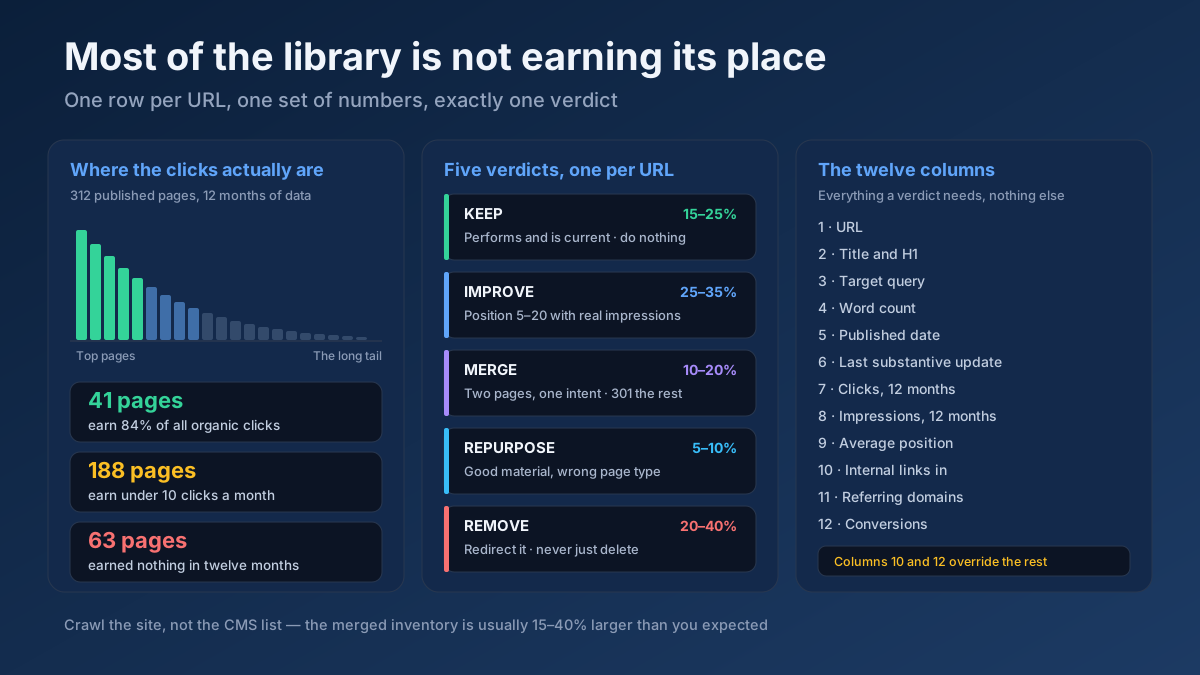 Content
How to do a content audit for SEO in 10 steps: inventory every URL, attach 12 months of data, then decide what to keep, improve, merge, repurpose or remove.
Read article →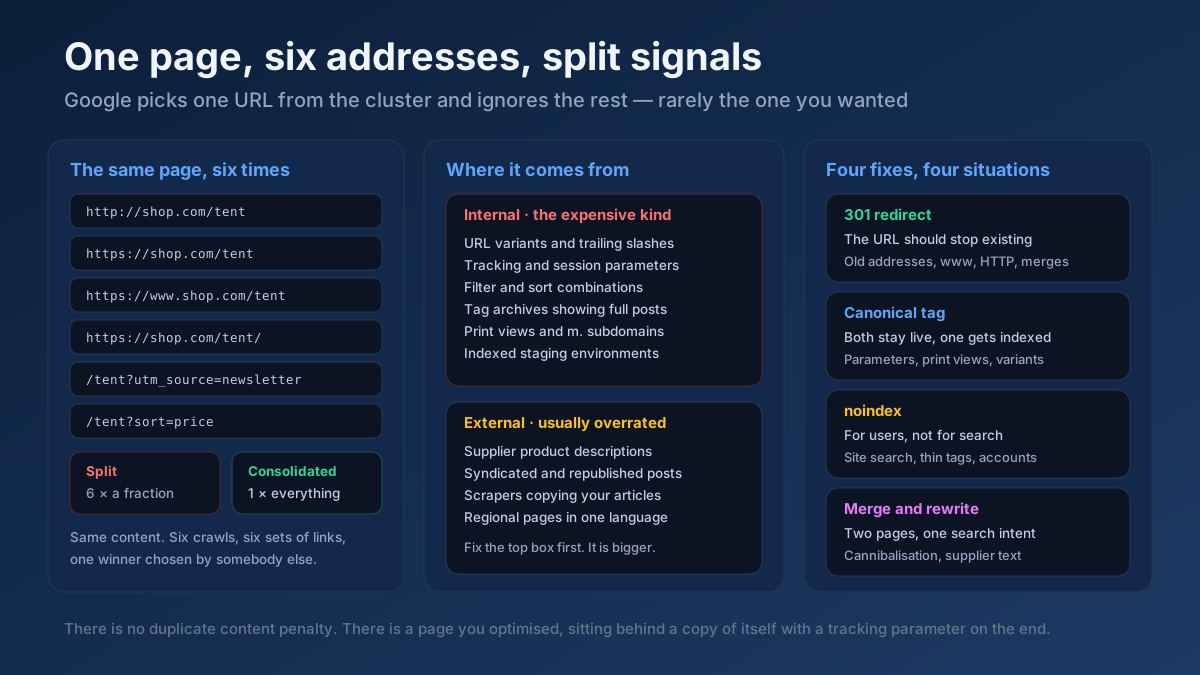 Technical SEO
How to fix duplicate content issues in 9 steps: find every duplicate URL, choose between a canonical, a 301 and noindex, and stop the problem returning.
Read article →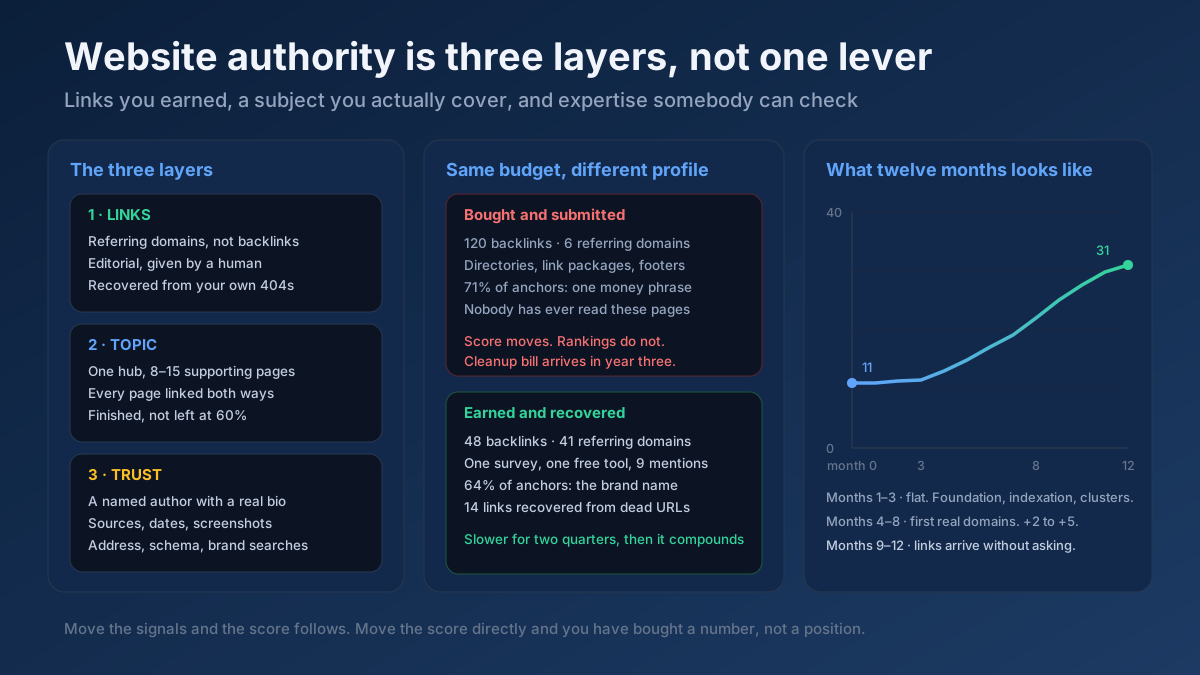 Link Building
How to increase website authority in 10 steps: what the score really measures, the link and content work that moves it, and how long each stage takes.
Read article →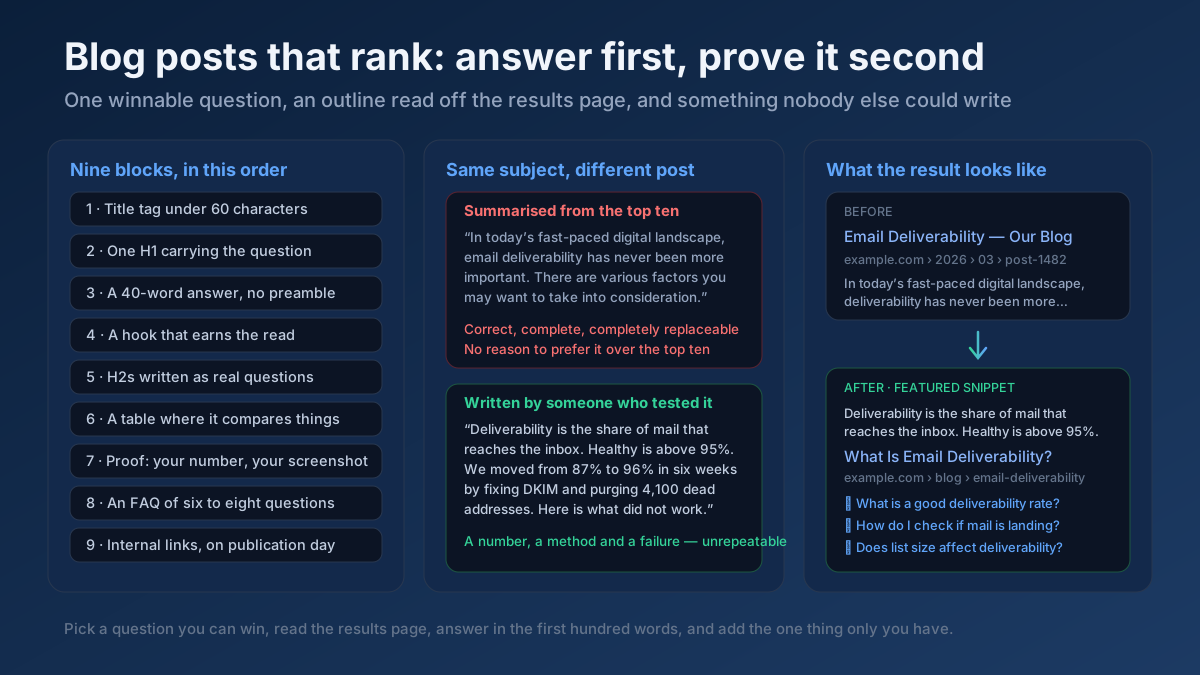 Content
How to write blog posts that rank: pick a winnable question, build the outline from the SERP, answer in the first 100 words, and update before it decays.
Read article →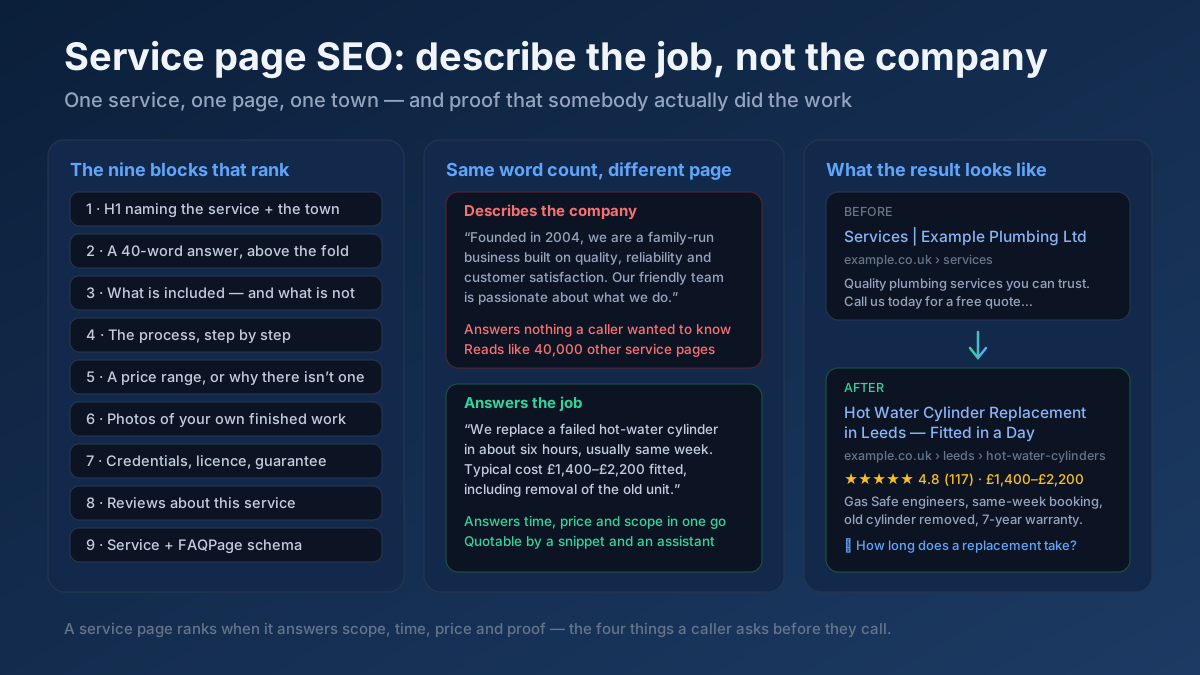 Local SEO
Service page SEO in 20 checks: pages that answer scope, time and price, town pages that are not doorways, Service schema, and a realistic 60-day plan.
Read article →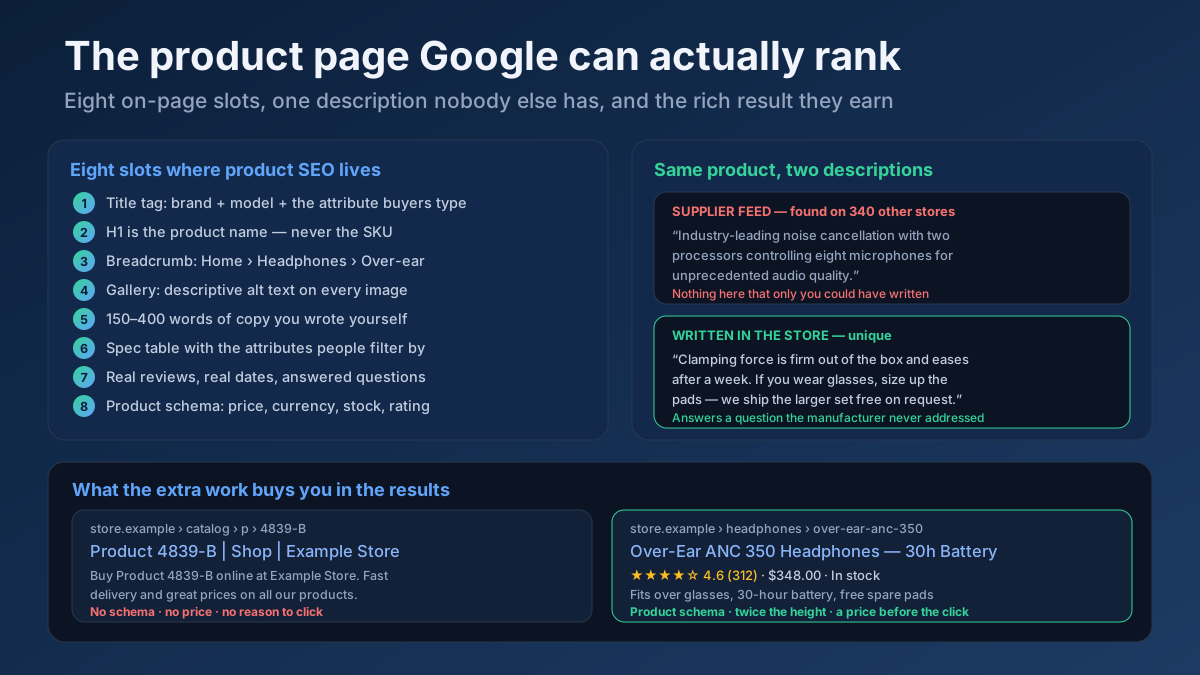 On-Page SEO
Ecommerce product page SEO in 21 checks: titles buyers actually search, descriptions nobody else has, valid Product schema and URLs that never bloat.
Read article →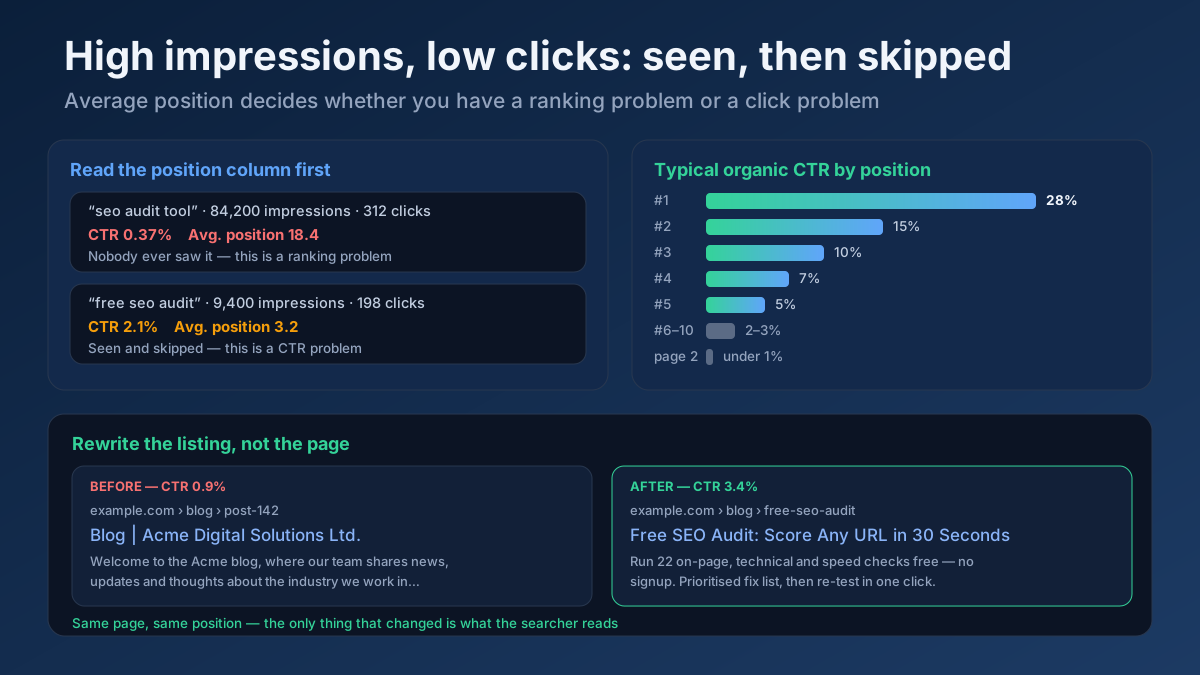 Analytics
High impressions but low clicks? Average position tells you whether it is a ranking problem or a snippet problem — and this guide gives the fix for both.
Read article →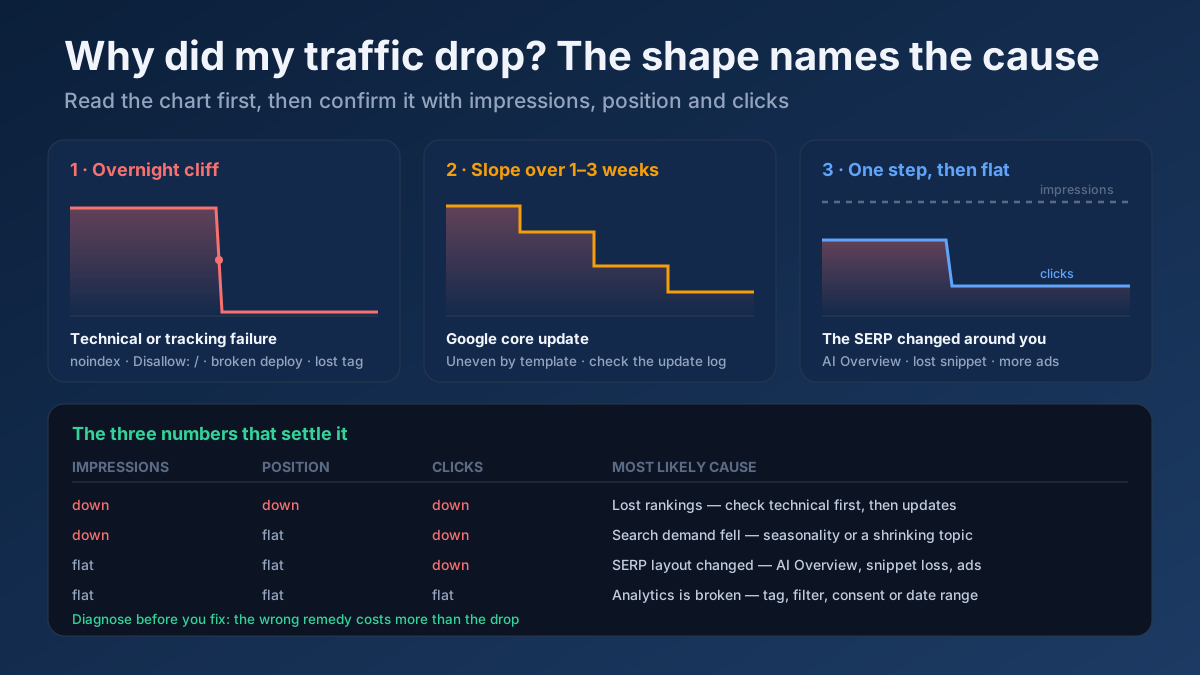 Analytics
Organic traffic drops for seven reasons. Read the shape of the drop, segment it in Search Console, and follow the recovery playbook for your actual cause.
Read article →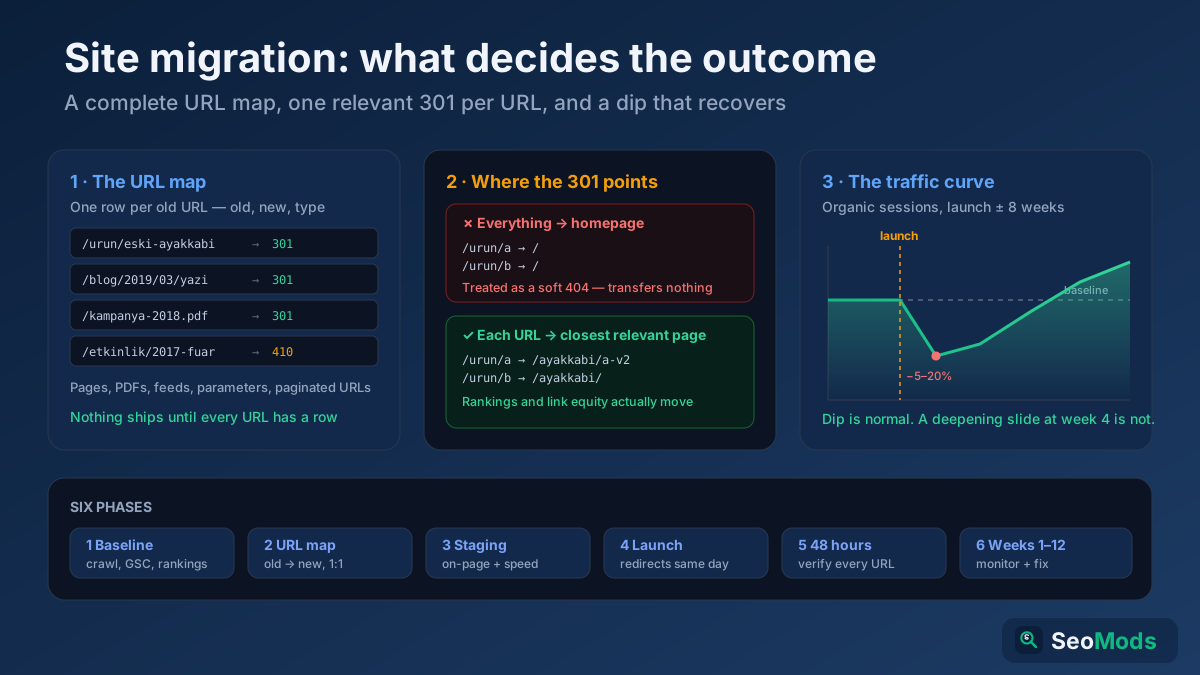 Technical SEO
A site migration is the riskiest thing you can do to organic traffic. The complete checklist: baseline, URL map, launch-day runbook and 48-hour verification.
Read article →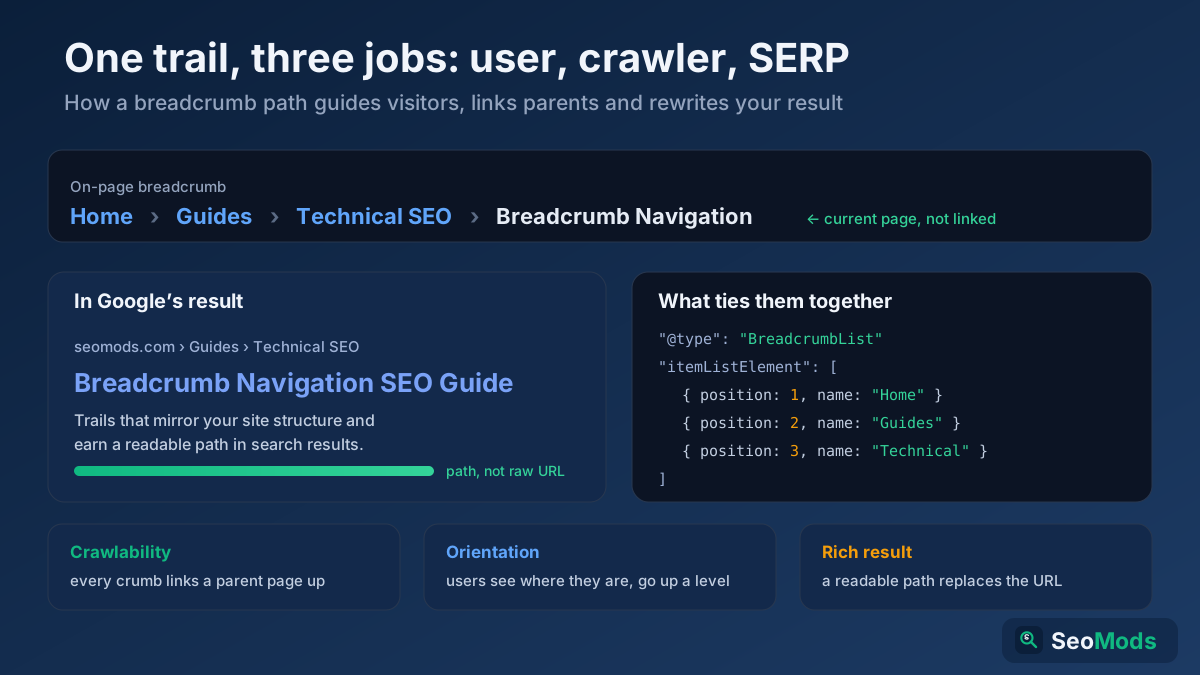 Technical SEO
Breadcrumbs show users and crawlers where a page sits in your hierarchy. Done right — with BreadcrumbList schema — they strengthen internal linking and can turn your raw URL into a readable search result.
Read article →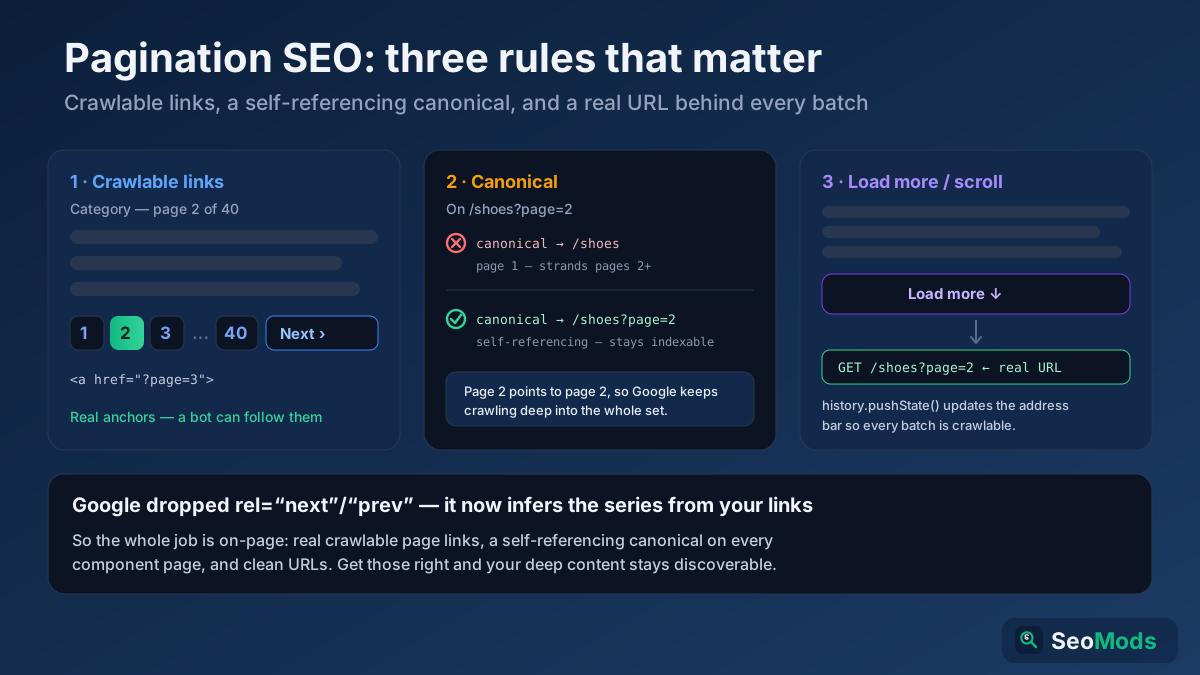 Technical SEO
How search engines handle paginated lists in 2026 — the canonical rule that makes or breaks it, why rel=next/prev is gone, and how to keep infinite scroll and “load more” crawlable.
Read article →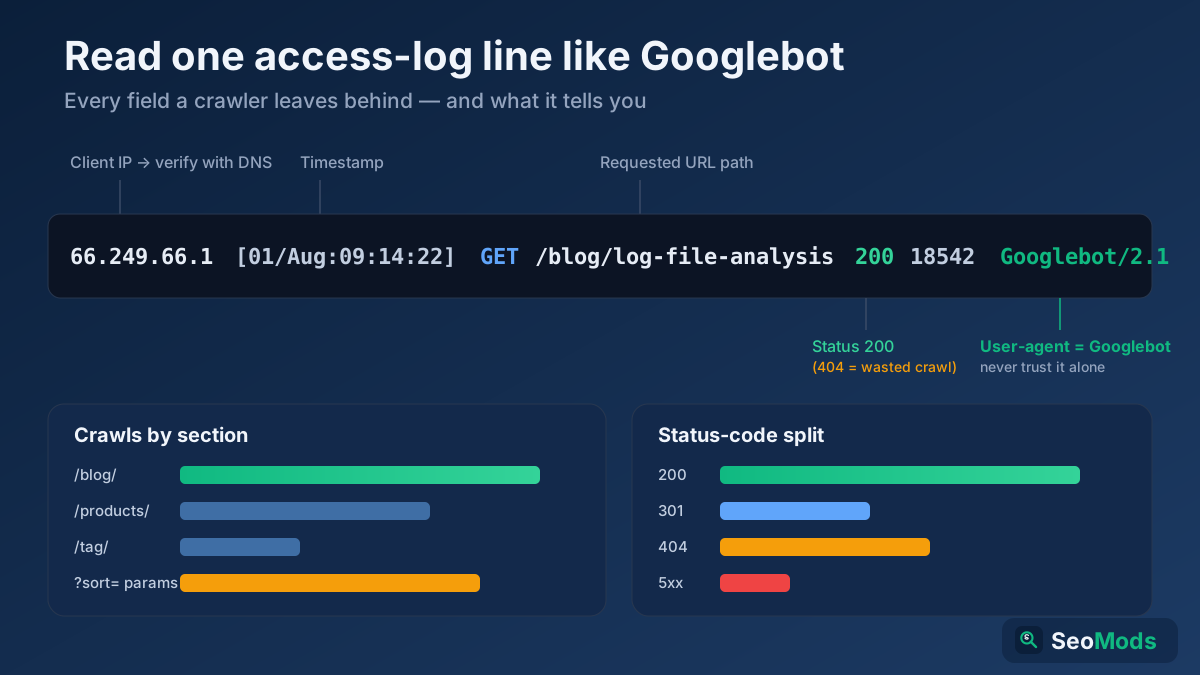 Technical SEO
Your server logs record every real Googlebot visit — which pages it crawls, how often, and what it ignores. This is the only source of ground truth about crawl behavior.
Read article →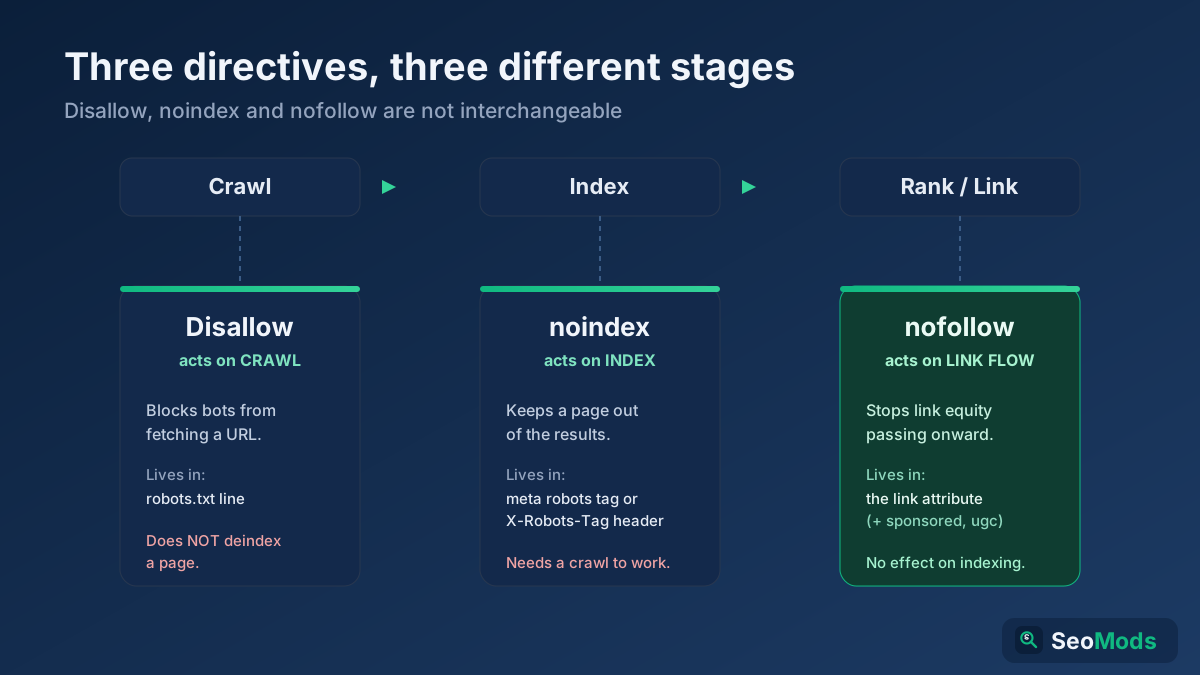 Technical SEO
Three directives that sound alike but do completely different things — and mixing them up can quietly deindex the wrong pages. Here is the plain-English difference.
Read article →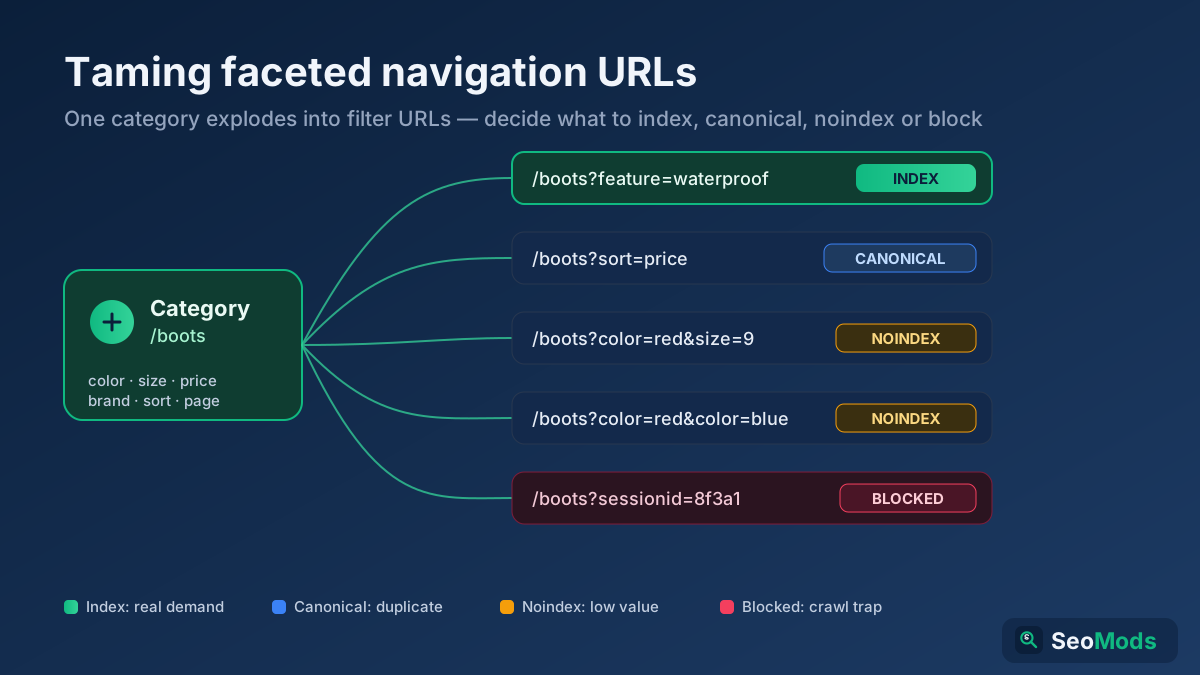 Technical SEO
Filters and sort options can spawn millions of near-duplicate URLs that drain crawl budget and split ranking signals. Here is how to control them without hiding your best pages.
Read article →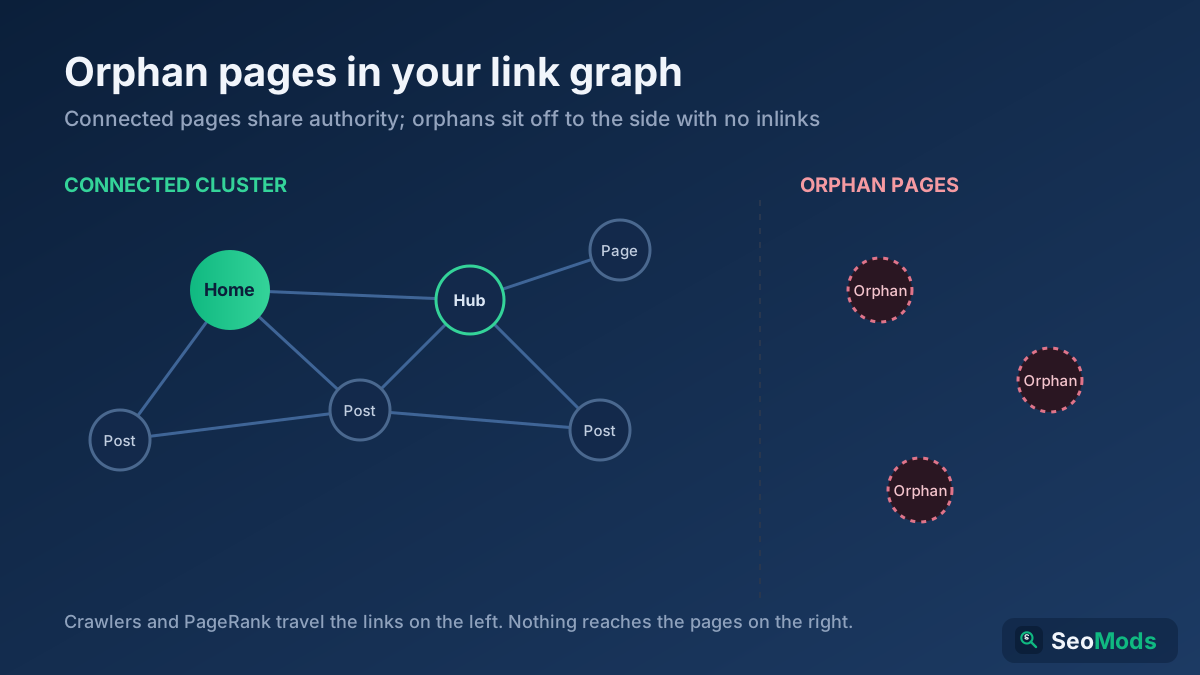 On-Page SEO
Orphan pages have no internal links pointing to them, so Google barely sees them and users never find them. Here is how to detect and reconnect them.
Read article →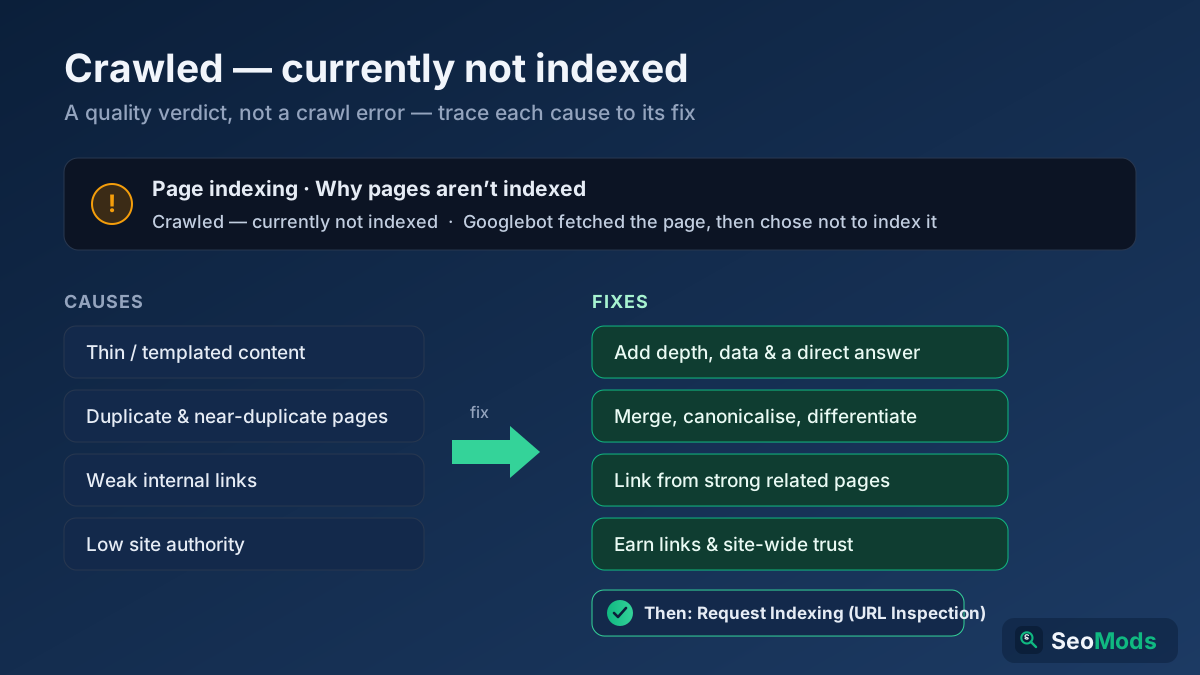 Analytics
Google visited your page but chose not to index it. Here is what that status really means and a prioritized checklist to earn the index spot back.
Read article →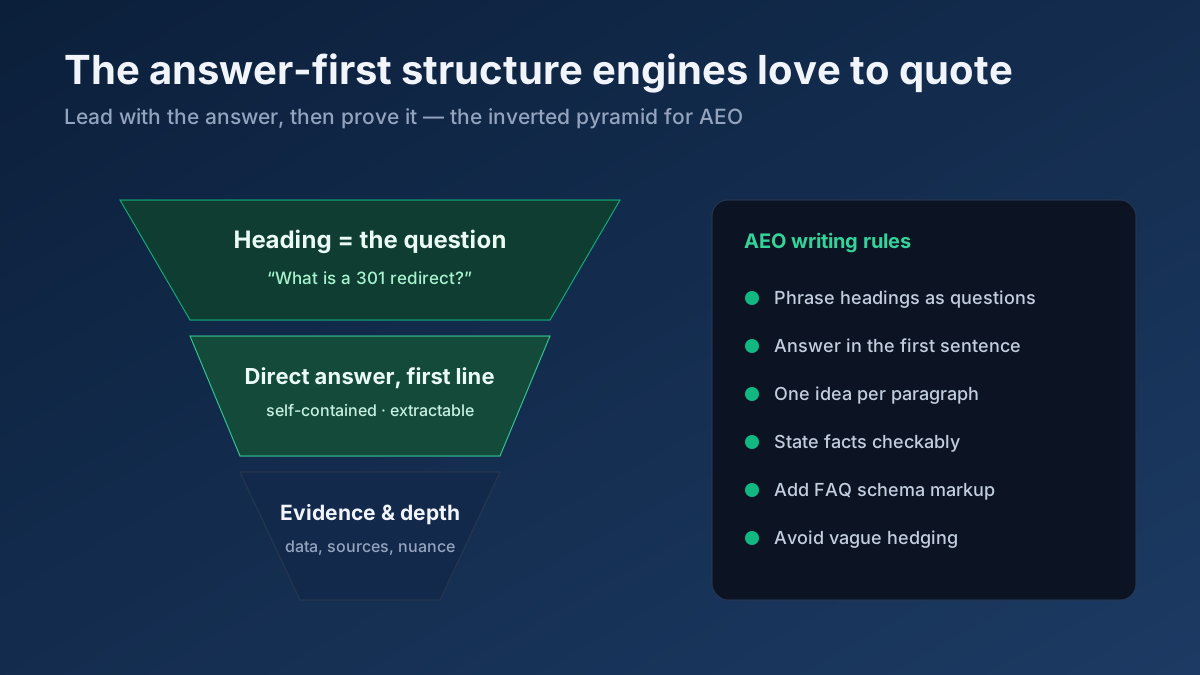 AI Search
Answer engines reward content that states the answer first and proves it fast. This is a practical writing framework for structuring pages that get quoted, not just ranked.
Read article →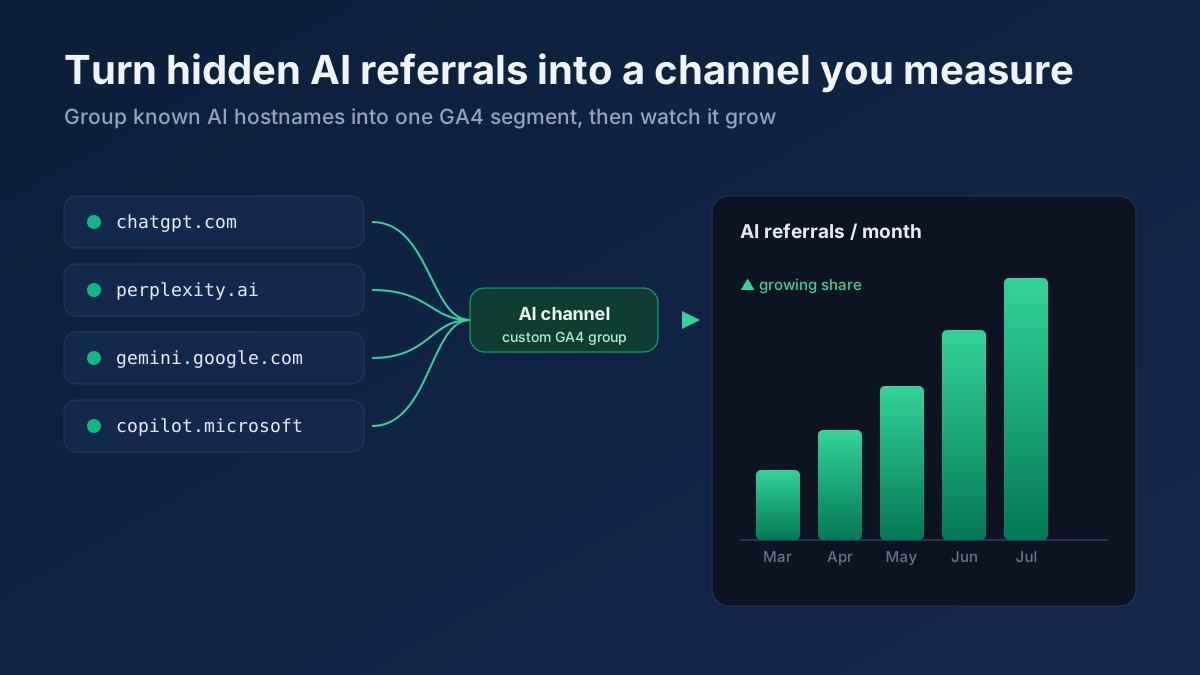 Analytics
AI assistants send real visitors — but they hide in your analytics unless you set up the right filters. Here is how to measure ChatGPT, Perplexity and AI Overview referrals.
Read article →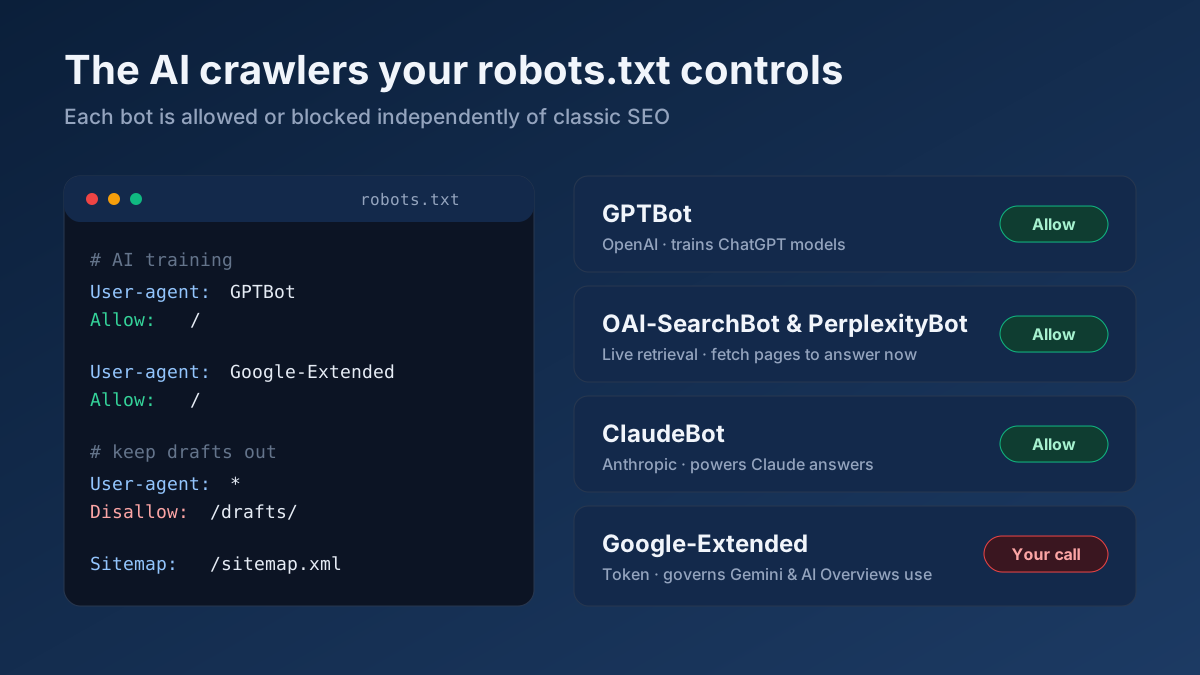 AI Search
A field guide to the AI bots crawling your site — who they are, what they do, and exactly how to allow or block each one in robots.txt without breaking your SEO.
Read article →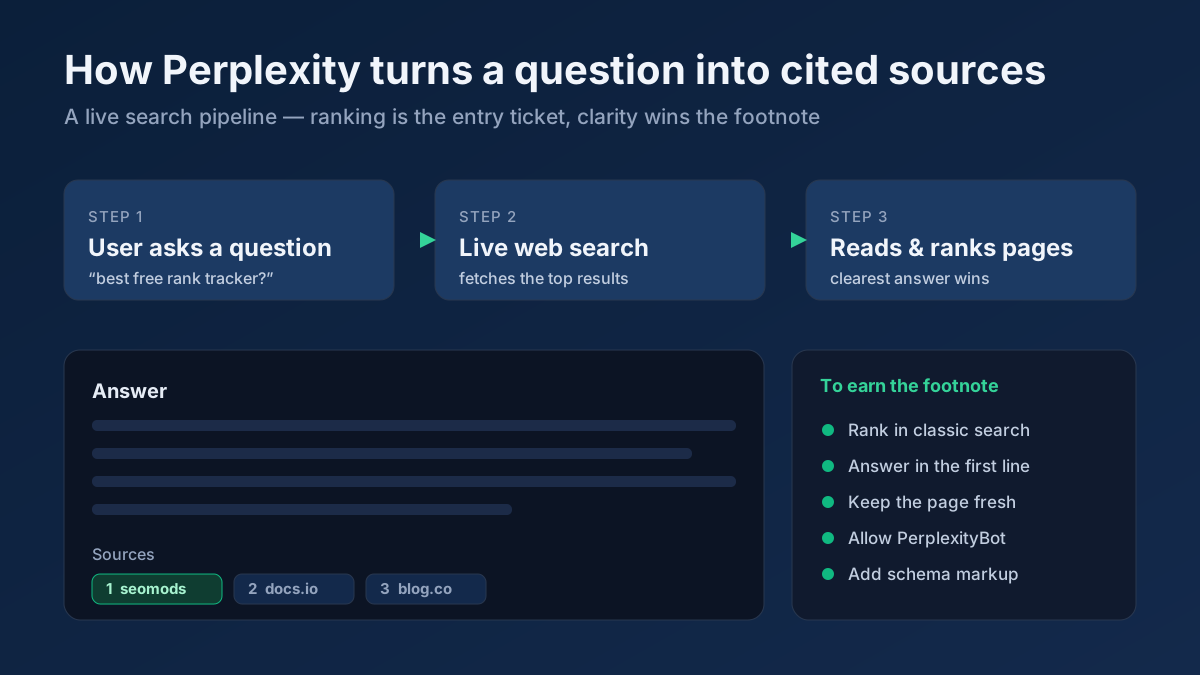 AI Search
Perplexity runs a live search, reads top results and cites its sources inline. This guide shows how to earn those citations with rankings, structure and freshness.
Read article →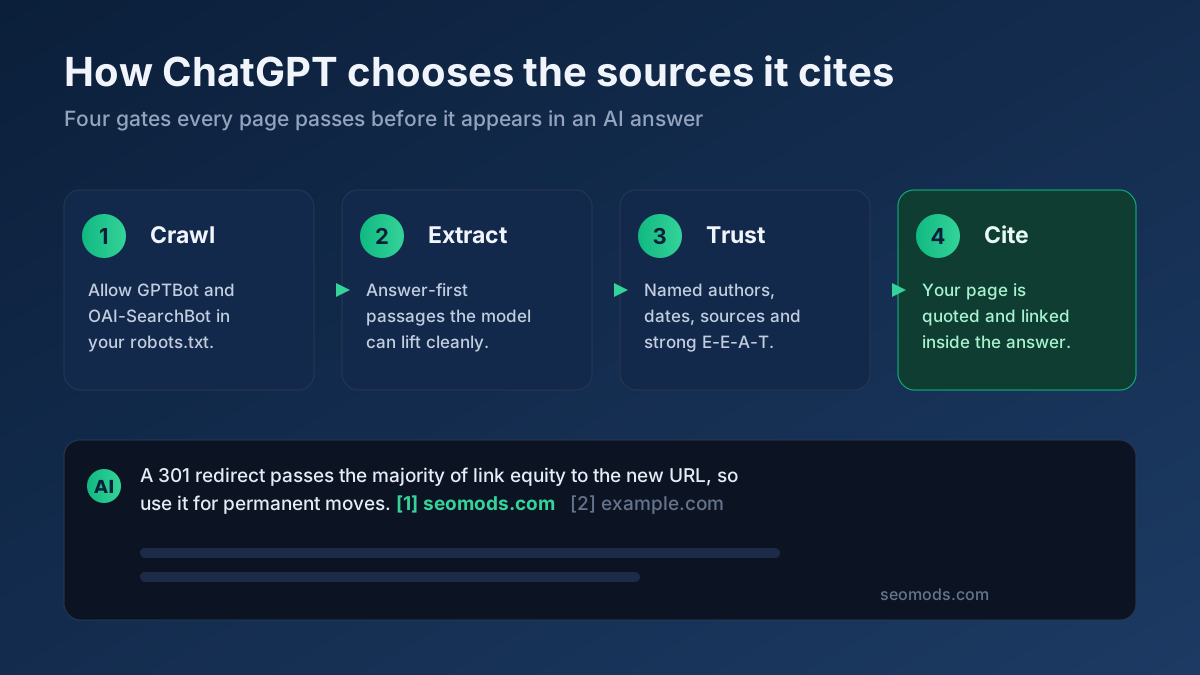 AI Search
ChatGPT search reads live web pages and quotes a handful of sources. Here is exactly how to structure content, schema and crawler access so your site becomes one of them.
Read article →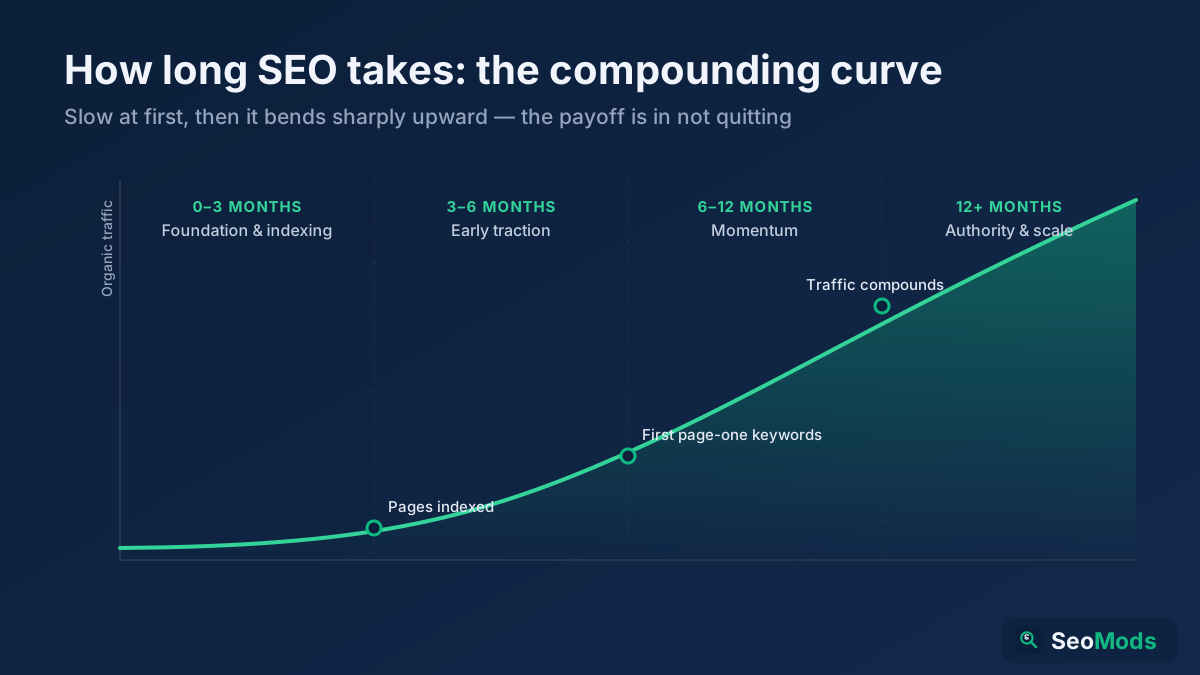 Analytics
SEO takes four to six months to show meaningful movement and six to twelve months to produce significant organic traffic — faster for technical fixes and established sites, slower for new domains in competitive niches. This 2026 guide gives a realistic month-by-month timeline, the seven factors that decide your pace, how to speed things up, and how to measure progress before your rankings even move.
Read article →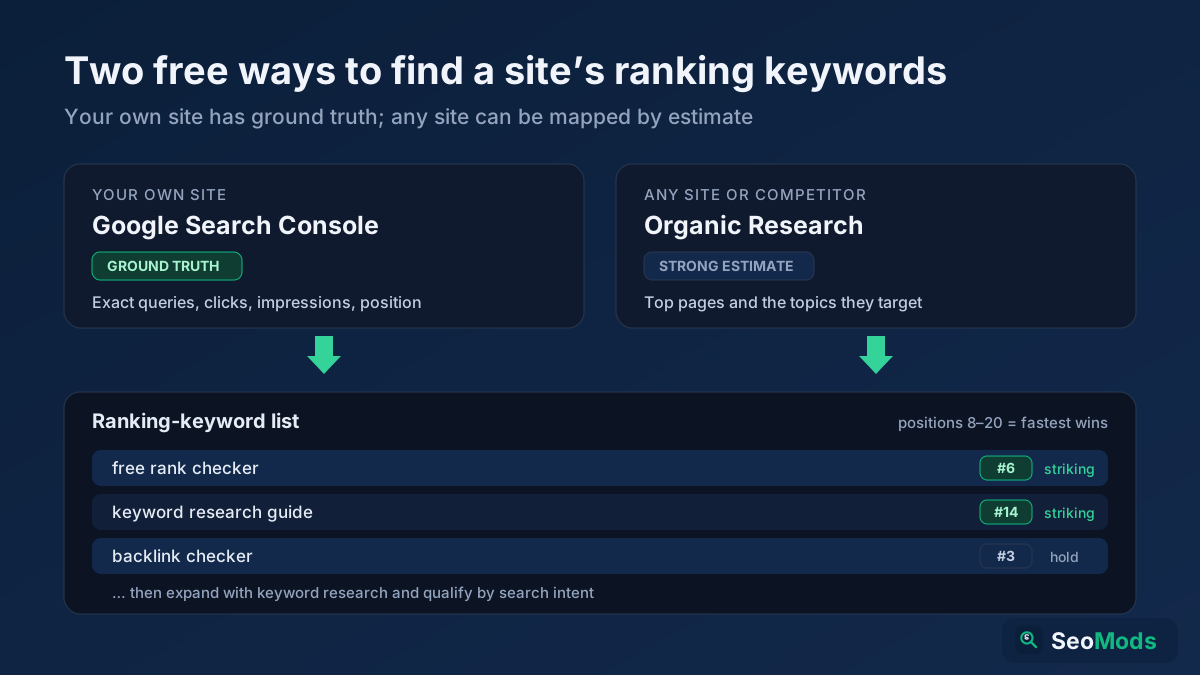 Keyword Research
Want to see every keyword a site already ranks for? This guide shows how to discover a website's ranking keywords for free — your own site or a competitor's — then turn that list into an action plan with free tools. No paid subscription needed.
Read article →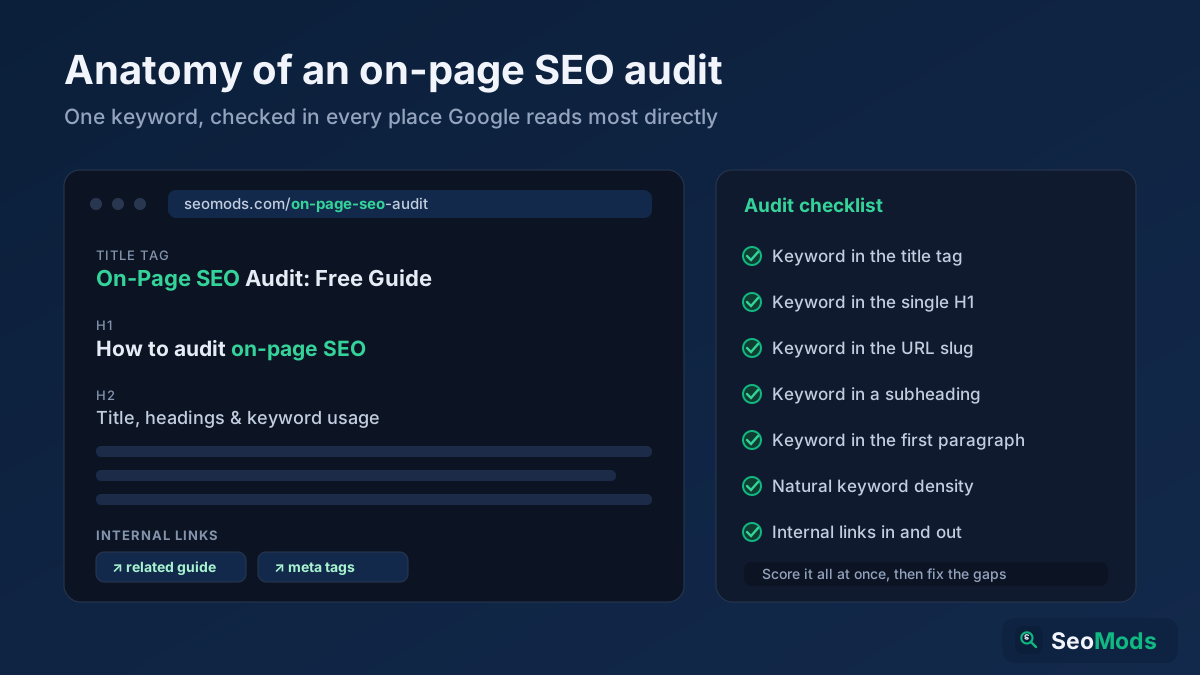 On-Page SEO
An on-page SEO audit checks how well a single page is optimized for its target keyword — title, H1, URL, headings, content and internal links. This step-by-step guide shows exactly how to audit and fix any page for free.
Read article →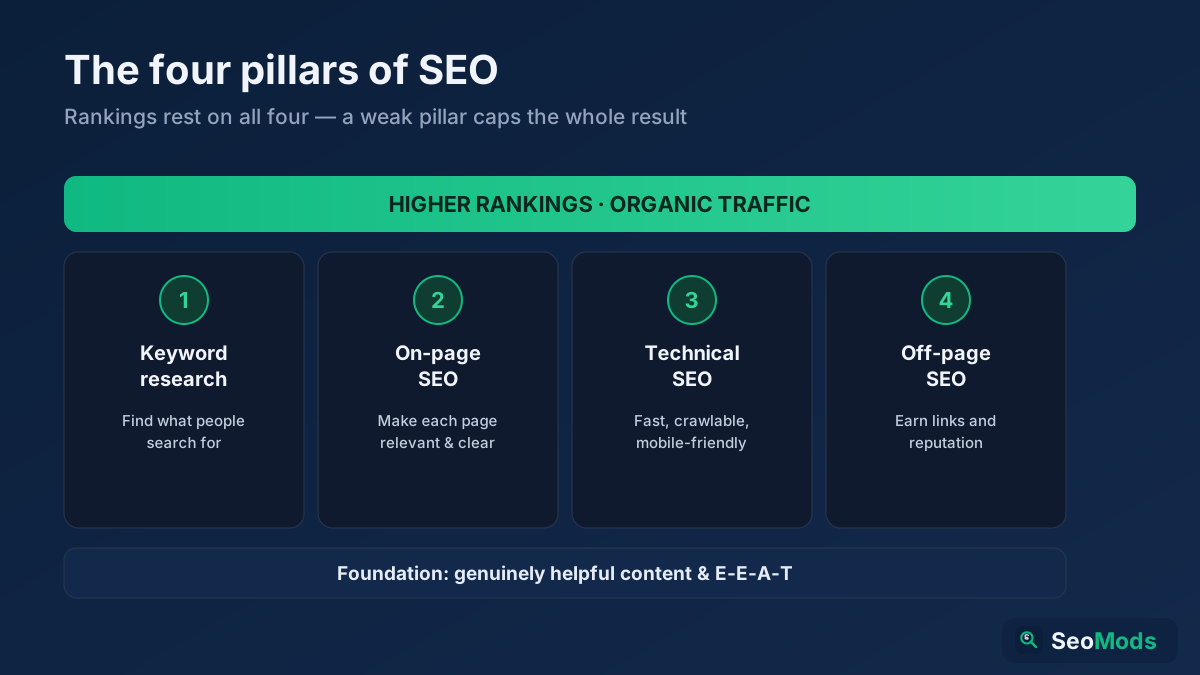 On-Page SEO
SEO is how you make a website rank higher in search engines so it earns free, organic traffic. This complete beginner's guide explains what SEO is, how search engines work, the four pillars (keyword research, on-page, technical and off-page), GEO for AI search, and a simple step-by-step roadmap you can start today.
Read article →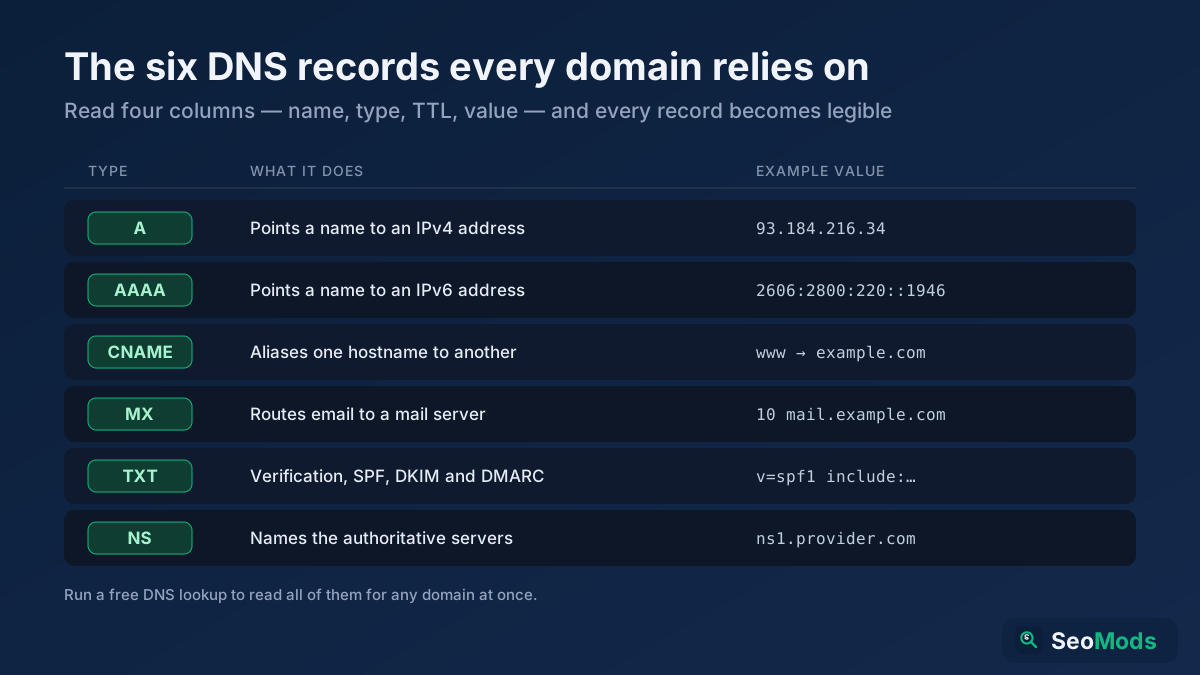 Technical SEO
DNS records are the hidden settings that route a domain's traffic, email and verification. Here is what A, AAAA, CNAME, MX, TXT and NS records do, how to read them, and how to check each one for free.
Read article →A WHOIS lookup reveals a domain's registrar, creation and expiry dates, name servers and — when it is not hidden by privacy — its owner. Here is what a WHOIS record means, how to find who owns a domain, and what to do when the owner is redacted.
Read article →A free site explorer lets you profile any domain in seconds — tech stack, top pages, links, domain age and more. Here is what a site explorer shows, how to read it, and how to use it for competitor research.
Read article →You can do professional SEO yourself without paying for expensive software. This beginner-friendly guide walks through the whole process step by step, using only free tools.
Read article →A practical, no-fluff guide to ranking higher on Google in 2026 — how ranking really works, the factors that matter, and exactly what to improve first, with free tools for each step.
Read article →Analyze every link on a page for free — internal vs external, nofollow vs dofollow, and broken links. Here is how and why it matters for SEO.
Read article →A complete, no-budget SEO audit you can run today: on-page, technical and content checks, with the free tools to do each one.
Read article →Track where your pages rank without paying for a rank tracker. Here is how to check keyword rankings for free and what the numbers really mean.
Read article →You do not need a paid subscription to check your backlinks. This guide shows how to verify, audit and analyze your links for free with the right tools.
Read article →GEO, AEO and LLMO are the three acronyms shaping AI search optimization. This guide defines each, shows how they overlap, and explains which to focus on.
Read article →LLMO is the practice of making your content easy for large language models to ingest, understand and reproduce accurately. Here is what it is and how to do it.
Read article →AEO is the practice of optimizing your content so answer engines and AI assistants return it as the direct answer to a question. Here is how it works and how it differs from SEO and GEO.
Read article →GEO and SEO share the same foundation but optimize for different destinations: ranked links vs cited AI answers. Here is how they differ and why you need both.
Read article →AI Overviews put an AI-generated answer at the top of Google with a few cited sources. Here is how Google selects them and how to make your pages eligible.
Read article →llms.txt is a simple Markdown file that gives AI models a clean, accurate summary of your site or product. Here is what it is, what to include, and how to create one.
Read article →A practical checklist to make your site easy for AI answer engines to crawl, understand and cite — from answer-first content to structured data and AI-crawler access.
Read article →GEO is the practice of making your content easy for AI answer engines like ChatGPT, Perplexity and Google AI Overviews to understand, cite and recommend. Here is how it works.
Read article →Google indexes the mobile version of your site. If mobile is weaker than desktop, rankings suffer.
Read article →Faster pages rank better and convert better. Here is a prioritized checklist that actually moves the needle.
Read article →You cannot improve what you do not measure. Here are the SEO metrics that actually matter.
Read article →Your Google Business Profile is the heart of local SEO. Here is how to optimize it for the map pack.
Read article →For local businesses, consistent NAP and citations are foundational. Here is what to get right.
Read article →Reverse-engineer what works for your competitors and find your fastest wins. Here is a free workflow.
Read article →Spammy links can drag your site down. Here is how to identify and disavow them safely.
Read article →Find dead links on other sites, offer your page as the replacement. A reliable white-hat link tactic.
Read article →Updating old content is often the highest-ROI SEO task. Here is a simple refresh workflow.
Read article →Google rewards content that demonstrates real experience and trust. Here is how to show E-E-A-T.
Read article →A clear heading structure helps readers, accessibility and rankings. Here is how to use H1–H6 correctly.
Read article →Clean, readable URLs help users and search engines. Here is how to structure them.
Read article →Optimized images speed up your site and earn traffic from Google Images. Here is the checklist.
Read article →Internal links spread authority and help Google understand your site. Here is how to do them well.
Read article →HTTPS is a ranking signal and a trust requirement. Here is how to migrate safely.
Read article →Using the wrong redirect type can lose rankings. Here is the simple rule for 301, 302 and redirect chains.
Read article →Targeting multiple countries or languages? hreflang tells Google which version to show whom. Here is how it works.
Read article →JavaScript frameworks can hide content from crawlers. Here is how to make sure Google sees your pages.
Read article →Crawl budget is how many pages Google crawls on your site. For large sites, wasting it costs rankings.
Read article →Schema markup helps Google understand your content and unlock rich results. Here is how to add it.
Read article →The rel=canonical tag tells Google which version of a page is the original. Here is when and how to use it.
Read article →robots.txt controls what crawlers can access. One wrong line can deindex your whole site — here is how to get it right.
Read article →An XML sitemap helps Google discover and prioritize your pages. Here is how to build and submit one correctly.
Read article →Featured snippets sit above the #1 result. Here is how to structure content to capture them.
Read article →The title tag is the single most important on-page element. Here is how to write titles that rank and get clicked.
Read article →Meta descriptions do not rank you directly, but they drive clicks. Here is how to write ones that win the SERP.
Read article →When multiple pages target the same keyword, they compete with each other and dilute rankings. Here is the fix.
Read article →Modern SEO is won with topical authority, not single pages. Learn the pillar-and-cluster model.
Read article →Ranking starts with matching what the searcher actually wants. Here are the four intent types and how to satisfy each.
Read article →Long, specific phrases are easier to rank for and bring higher-intent traffic. Here is how to find and use them.
Read article →INP replaced FID in 2024. Here is what Core Web Vitals mean today and how to measure and improve performance for free.
Read article →Backlinks are still a top ranking factor. Learn how to verify, audit and find link opportunities — without paying for an index.
Read article →Title tags, headings, internal links and content depth — everything that signals relevance to Google on a single page.
Read article →Crawlability, indexability, speed and structured data — the technical foundations that let your content rank.
Read article →A practical, no-budget keyword research workflow: find ideas, understand intent, and group keywords into clusters that rank.
Read article →No articles match your search. Try a different keyword or category.
Your site may have a critical PHP vulnerability
PHP2Shell (CVE-2026-109618 and CVE-2026-109619) lets attackers run code on servers running PHP older than 8.2.35, 8.3.36, 8.4.27 or 8.5.12, without logging in. Attacks have been seen since 17 October. Check whether your site is affected.