Internal links are links from one page on your site to another page on the same site. They are one of the most powerful — and most underused — levers in SEO. Good internal linking helps Google discover your pages, spreads ranking authority between them, and guides visitors deeper into your content. Best of all, you control it completely, with no outreach or link building required.
Why internal links matter
Internal links do three important jobs. They help search engines discover new pages by giving crawlers paths to follow. They distribute authority, passing ranking power from strong pages to the ones you want to lift. And they help Google understand context — the anchor text and surrounding content tell it what the linked page is about. For users, they improve navigation and keep people engaged longer.
Internal linking best practices
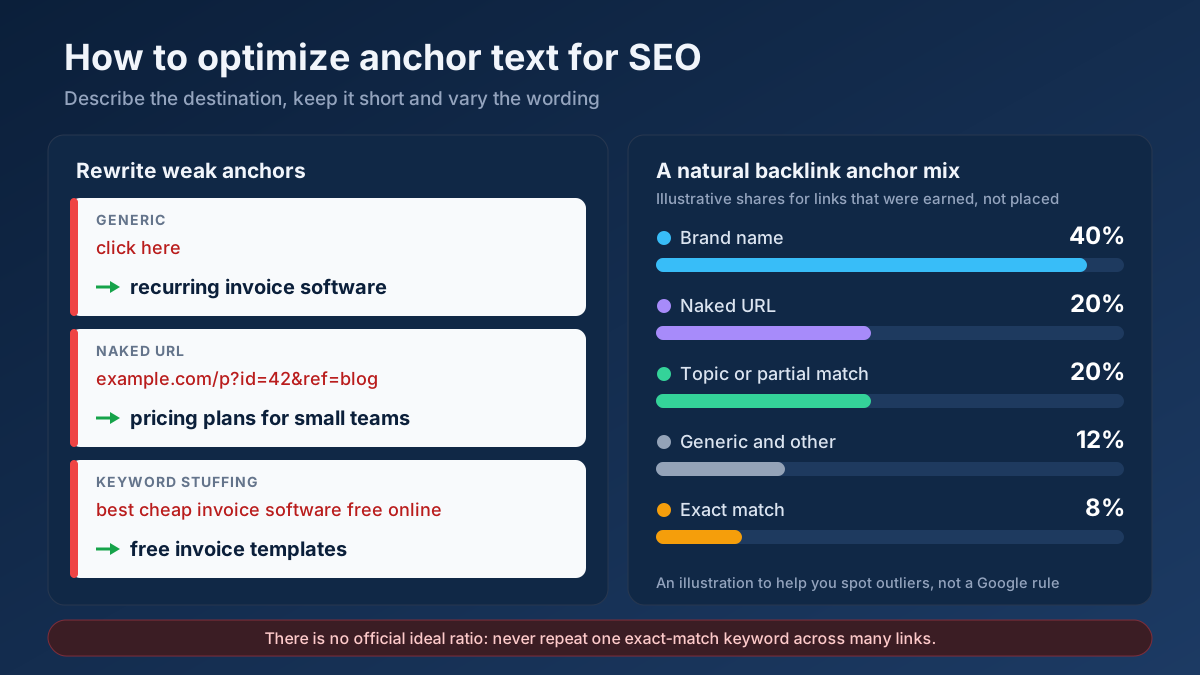
- Use descriptive anchor text. Link with keyword-rich, meaningful phrases — never 'click here' or 'read more', which waste the context signal. Our guide on how to optimize anchor text for SEO shows how to write and vary them.
- Link from strong pages to important targets. Pass authority from your most-linked pages to the ones you want to rank.
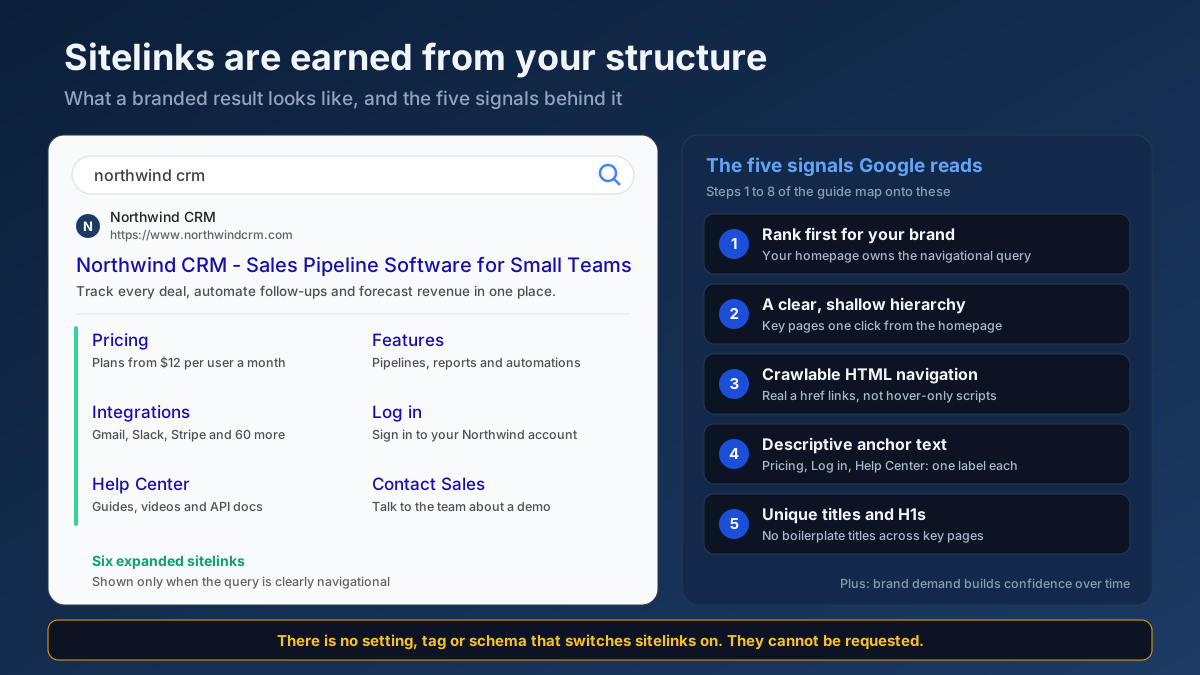
- Keep important pages shallow. Key pages should be reachable within a few clicks of the homepage.
- Link contextually. Links within body content carry more weight and relevance than footer or sidebar links.
- Do not overdo it. A handful of relevant links per page is plenty; stuffing in dozens dilutes their value.
Build a logical structure
The strongest internal linking flows from a clear site structure. The pillar-and-cluster model is ideal: a broad pillar page links to focused cluster articles, and each cluster links back to the pillar and to related clusters. This creates a dense, meaningful web of links around each topic that signals authority to Google. Learn more in our topic clusters guide.
Common internal linking mistakes
- Orphan pages — pages with no internal links pointing to them are hard for Google to find and value.
- Generic anchors — 'click here' tells Google nothing about the destination.
- Broken internal links — dead links waste crawl budget and frustrate users.
- Too many links — overloading a page with links dilutes the authority each one passes.
How to audit your internal links
Map the internal and external links on any page — including anchor text and nofollow status — with the Link Analyzer. Crawl your whole site with the Technical Site Audit (Crawler) to find orphan pages and structural gaps, and catch dead internal links with the Broken Link Checker. Reviewing this regularly keeps your link structure healthy as your site grows.
Frequently asked questions
How many internal links should a page have?
There is no strict rule, but aim for a sensible number of genuinely relevant links — often a handful within the body content. Quality and relevance matter far more than quantity, and a page crammed with links serves neither users nor SEO well.
Do internal links pass as much value as backlinks?
Internal links pass authority within your site, while backlinks bring authority from other sites. Internal links cannot replace backlinks, but they distribute the authority you have very effectively — which is why they are such a high-leverage, free optimization.
Applying this to your own site? See the tools picked by audience: SEO Tools for Freelance SEOs and SEO Tools for WordPress Site Owners.
Conclusion
Internal linking is free, fully in your control, and remarkably effective. Use descriptive anchors, link from strong pages to your priorities, build a clear cluster structure, and fix orphans and broken links. Audit with the Link Analyzer and Technical Site Audit (Crawler), and make internal linking a deliberate part of your on-page SEO routine.
The simplest habit that pays off here is to link backward every time you publish. When you add a new article, find two or three existing, relevant pages and link from them to the new piece — and link from the new piece to related older content. This small, consistent practice prevents orphan pages, continually strengthens your most important URLs, and weaves your site into a coherent web that both readers and Google can navigate with ease. Over time, that compounding internal link equity becomes a genuine competitive advantage.