SEO competitor analysis is the practice of studying the sites that already rank for your target keywords to understand why they win — and where you can beat them. Instead of guessing what Google rewards in your niche, you reverse-engineer the proven winners. Done well, it turns a vague content strategy into a prioritized, evidence-based plan, and it is one of the fastest ways for a smaller site to find achievable opportunities.
Identify your real SEO competitors
Your SEO competitors are not always your business competitors. A small blog, a marketplace listing, or a comparison site might outrank you for the queries you care about, even if they do not sell what you sell. To find them, search your most important keywords and note which domains appear repeatedly on page one. Those recurring names — not just the brands you compete with commercially — are the sites to study.
Group them into tiers: aspirational leaders (huge authority you cannot match yet), direct rivals (similar size and authority), and beatable targets (sites you can realistically outrank now). Spend most of your energy on that last group.
Profile each competitor
Start by understanding the whole site. Run a rival domain through the Site Explorer to see its technology stack, server, approximate page count, social presence, domain age and on-site SEO signals at a glance. This quickly tells you how established they are and how they are built — a brand-new site on a basic stack is a very different target from a decade-old domain on enterprise infrastructure.
Next, map their content. Pull their most important pages and content sections from their sitemap with the Organic Research / Top Pages to see which topics they invest in and how their site is structured. The sections they have built out the most are usually the ones driving their traffic.
Analyze their content strategy
Open the specific pages that outrank you and study them like a search quality rater would. Ask: What intent does this page serve? How long and how deep is it? What subtopics, examples, images and data does it include? How is it structured with headings? What is the title and angle? You are looking for the pattern Google is rewarding — the 'shape' of a winning page for that query.
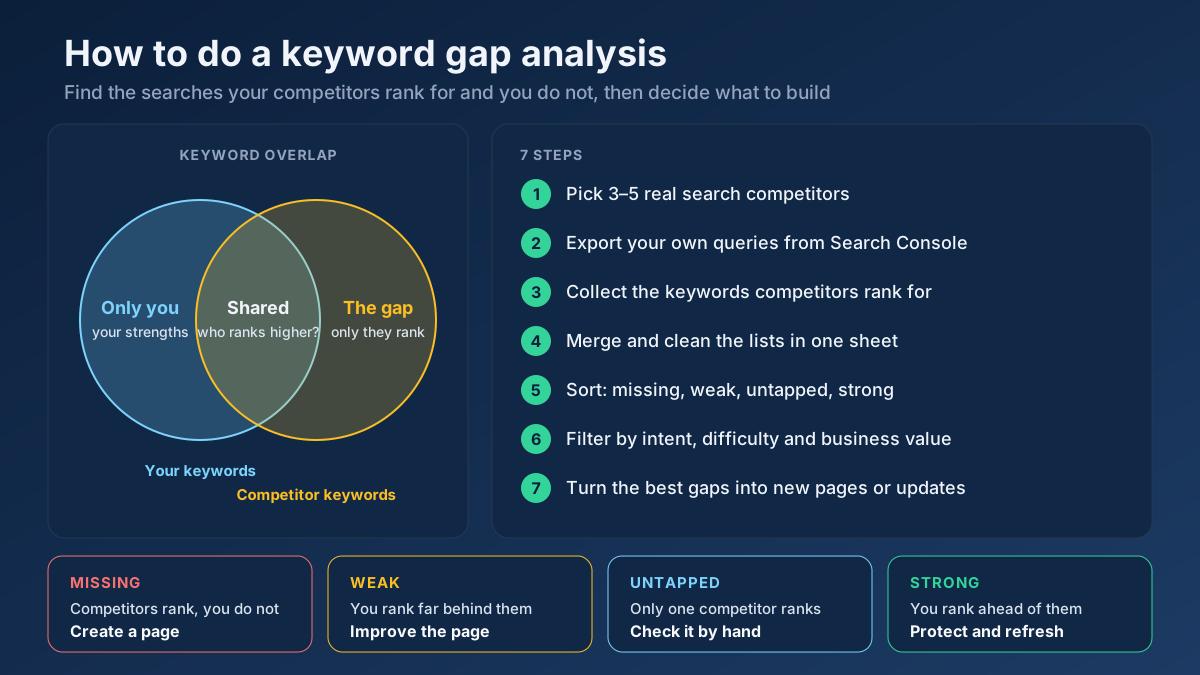
Then find the gaps. Compare your page against theirs with the Content / Keyword Gap to reveal the keywords and terms they cover that you do not. These gaps are your fastest content wins: add the missing sections to an existing page and you often climb without writing anything new from scratch. To run the same comparison across a whole site, follow our step-by-step guide on how to do a keyword gap analysis.
Study their backlink sources
Links are a major reason established competitors rank, so understanding where theirs come from is invaluable. The most actionable angle is the link intersect: find domains that link to several of your competitors but not to you, using the Link Intersect / Backlink Gap. Those sites already link to pages like yours, which makes them your warmest outreach prospects. Pair this with the tactics in our link building guide.
Benchmark the technical basics
Sometimes you can win simply by being faster, more secure or better structured than a complacent competitor. Compare page speed, HTTPS, mobile-friendliness and structured data. A competitor with great content but a slow, clunky site is beatable on experience — and these are factors fully within your control.
Turn analysis into an action plan
Analysis is only useful if it changes what you do. Convert your findings into a prioritized list:
- Quick wins — content gaps on existing pages you can fill this week.
- New content — proven topics your competitors rank for that you have not covered at all.
- Link targets — the shared linking domains to pursue.
- Technical improvements — speed, structure and markup advantages you can claim.
Sequence them by effort versus impact, starting with high-impact, low-effort items to build momentum.
Common mistakes
- Copying instead of beating. Matching a competitor only ties you; aim to cover the topic more completely or from a better angle.
- Targeting the wrong tier. Chasing the untouchable market leader wastes effort better spent on beatable rivals.
- Analyzing once and stopping. Competitors evolve. Revisit your analysis every quarter.
- Ignoring intent. If a competitor ranks with a comparison page and you publish a product page, you have already lost the match-up.
Frequently asked questions
How many competitors should I analyze?
Three to five is plenty for most projects. Pick the sites that appear most consistently for your priority keywords, with an emphasis on the beatable tier. Analyzing too many spreads your attention thin and produces a backlog you will never work through. Depth on a few relevant competitors beats shallow notes on a dozen.
Can I really do competitor analysis for free?
Yes. Paid platforms add convenience and proprietary estimates, but the fundamentals — identifying who ranks, studying their content and structure, finding content gaps and shared link sources — can all be done with free tools and a careful eye. The free approach takes a little more manual effort, but the strategic insight is the same.
How is this different from keyword research?
They complement each other. Keyword research tells you what people search; competitor analysis tells you who is already winning those searches and why. Run them together: research a topic, then study the pages that rank for it before you write your own.
What if my competitors are huge brands?
Do not try to beat them everywhere. Find the long-tail and niche queries where their pages are generic or outdated, and win those first. Authority is built one achievable topic at a time, and even the biggest sites have gaps a focused challenger can exploit.
Applying this to your own site? See the tools picked by audience: SEO Tools for Freelance SEOs and SEO Tools for Marketing Agencies.
Conclusion
Competitor analysis replaces guesswork with evidence. Identify who really ranks, profile them with the Site Explorer and Organic Research / Top Pages, find content gaps with the Content / Keyword Gap and link prospects with the Link Intersect / Backlink Gap, then turn it all into a prioritized plan. Make it a quarterly habit and pair it with disciplined measurement to keep closing the gap with the leaders in your niche.
Above all, stay consistent. The teams that win at SEO treat competitor analysis as a recurring discipline, not a one-off project — markets shift, rivals publish, and yesterday's gaps get filled. A focused review every quarter keeps your strategy grounded in what is actually ranking today rather than what worked last year.