How it works
- Configure your rules — pick the user-agent and add the paths to allow or disallow.
- Optionally set a crawl-delay and add your sitemap URL.
- Generate the file and copy or download the output.
- Upload it as
robots.txtin your site's root directory.
What it generates
- User-agent blocks — target all crawlers with
*or name a specific bot. - Disallow rules — block paths like
/admin/or/cart/from being crawled. - Allow rules — re-open specific paths inside a blocked folder.
- Crawl-delay — an optional pause between requests for bots that honour it.
- Sitemap reference — a full
Sitemap:line pointing to your XML sitemap. - Clean formatting — correct ordering and one directive per line, ready to deploy.
Common use cases
- New site launch — create a sensible robots.txt before search engines start crawling.
- Blocking private areas — keep admin, checkout or staging paths out of the index.
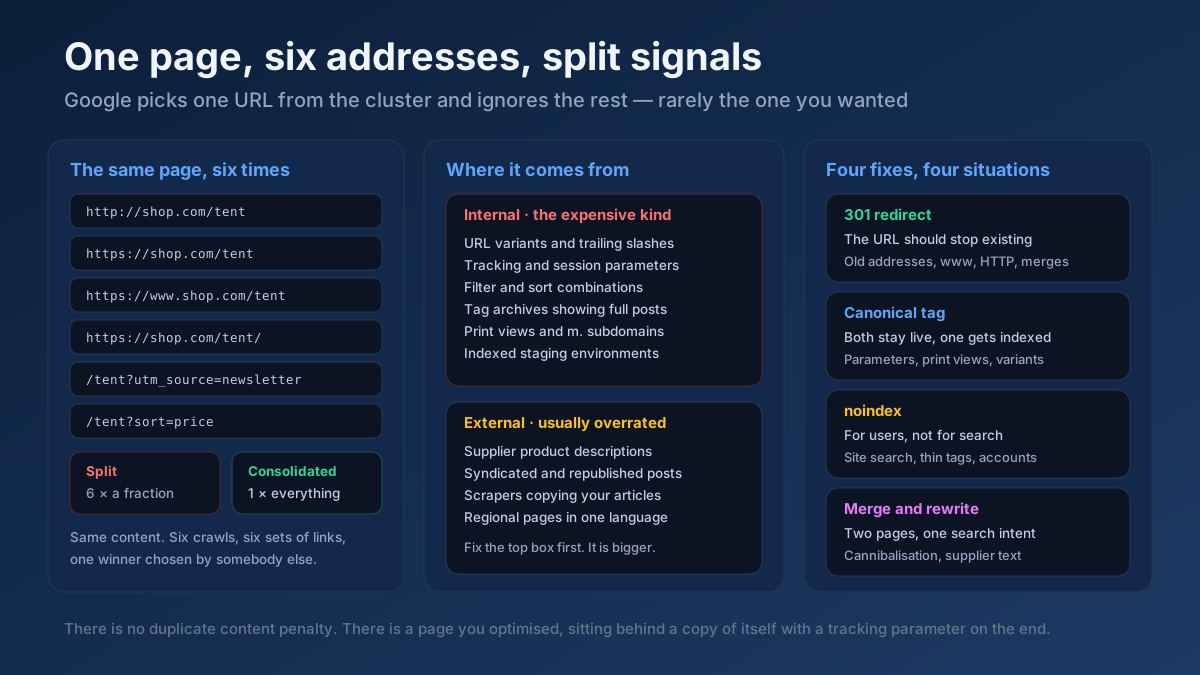
- Saving crawl budget — stop bots wasting time on faceted or duplicate URLs.
- Adding a sitemap — make sure crawlers can discover your sitemap automatically.
Example
To block your admin area but allow everything else and declare a sitemap, the tool outputs: User-agent: * — copy it straight into your root file.
Disallow: /admin/
Allow: /
Sitemap: https://example.com/sitemap.xml
Frequently asked questions
Is the Robots.txt Generator free?
Yes — completely free, with no signup and no limits. It runs in your browser and never stores your input.
Where do I put the file?
It must live at the root of your domain, at https://example.com/robots.txt. After uploading, confirm the rules behave as intended with the Robots.txt Tester and make sure your sitemap resolves with the Sitemap Finder & Validator.
Can a wrong rule hurt my SEO?
Yes — a stray Disallow: / can block your whole site from being crawled. Always double-check before deploying. Our robots.txt guide explains each directive and common pitfalls in detail.