UTM Campaign URL Builder

Create trackable campaign URLs with utm_source, medium, campaign, term and content parameters.

Fetching live data…

Quick answer

The UTM Campaign URL Builder is a free, in-browser tool that adds trackable UTM parameters to any link so your analytics can attribute traffic to the exact source, medium and campaign that drove it. You enter your destination URL and a few campaign details, and the tool appends a clean, correctly encoded query string. Consistent UTM tagging is the difference between guessing where visitors came from and knowing — and this tool keeps your tags tidy and typo-free. Everything runs locally in your browser.

How it works

  1. Configure your inputs — paste the base URL and fill in the campaign fields.
  2. The tool URL-encodes each value and appends the parameters in the correct order.
  3. Generate the full link and copy it with one click.
  4. Use the tagged URL in your ad, email, post or QR code.

What it generates

  • utm_source — where the traffic comes from (e.g. newsletter, google).
  • utm_medium — the channel type (e.g. email, cpc, social).
  • utm_campaign — the campaign name that ties the links together.
  • utm_term — an optional keyword, mainly for paid search.
  • utm_content — an optional label to A/B test links or creatives.
  • Encoded query string — spaces and symbols escaped so the link never breaks.

Common use cases

  • Email campaigns — measure exactly which newsletter drove sign-ups.
  • Paid ads — separate Google, Meta and other ad traffic in analytics.
  • Social posts — track which platform and post sent the most clicks.
  • A/B testing — use utm_content to compare two versions of a link.

Example

Tagging a newsletter link produces something like https://example.com/?utm_source=newsletter&utm_medium=email&utm_campaign=spring_sale — paste that into your email and every click is attributed correctly in your analytics.

Frequently asked questions

Is the UTM Builder free?

Yes — completely free, with no signup. It runs in your browser and never stores the URLs you build.

Do UTM tags hurt SEO?

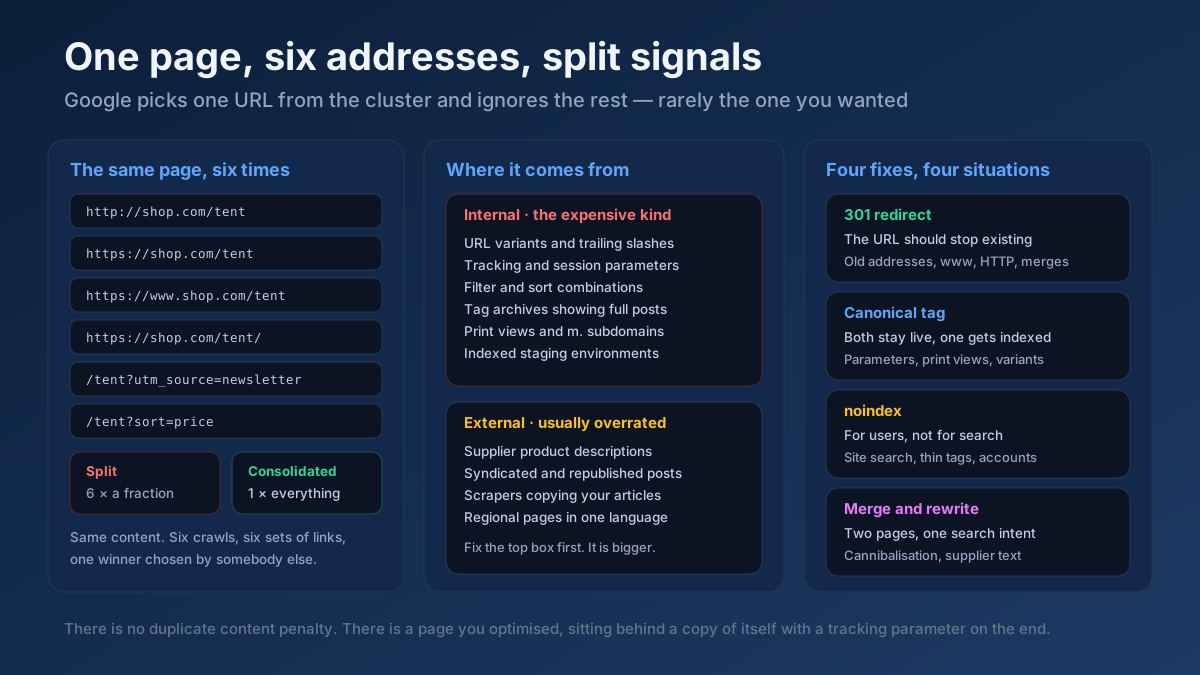
Not when used correctly. Keep UTM-tagged URLs for outbound campaigns and avoid them on internal links, since duplicate parameter variants can dilute crawling. A self-referencing canonical keeps your clean URL authoritative — generate one with the Meta Tag Generator and validate redirects with the Redirect & HTTP Status Checker.

Should I use uppercase or lowercase values?

Always lowercase, and be consistent — analytics treats Email and email as two different mediums. Learn how clean URLs and tracking fit together in our URL structure best practices guide.