Mobile-First Indexing: What It Means for You
Google indexes the mobile version of your site. If mobile is weaker than desktop, rankings suffer.
Read article →Query live A, AAAA, MX, NS, TXT, CNAME, SOA and SRV records for any domain.
Fetching live data…
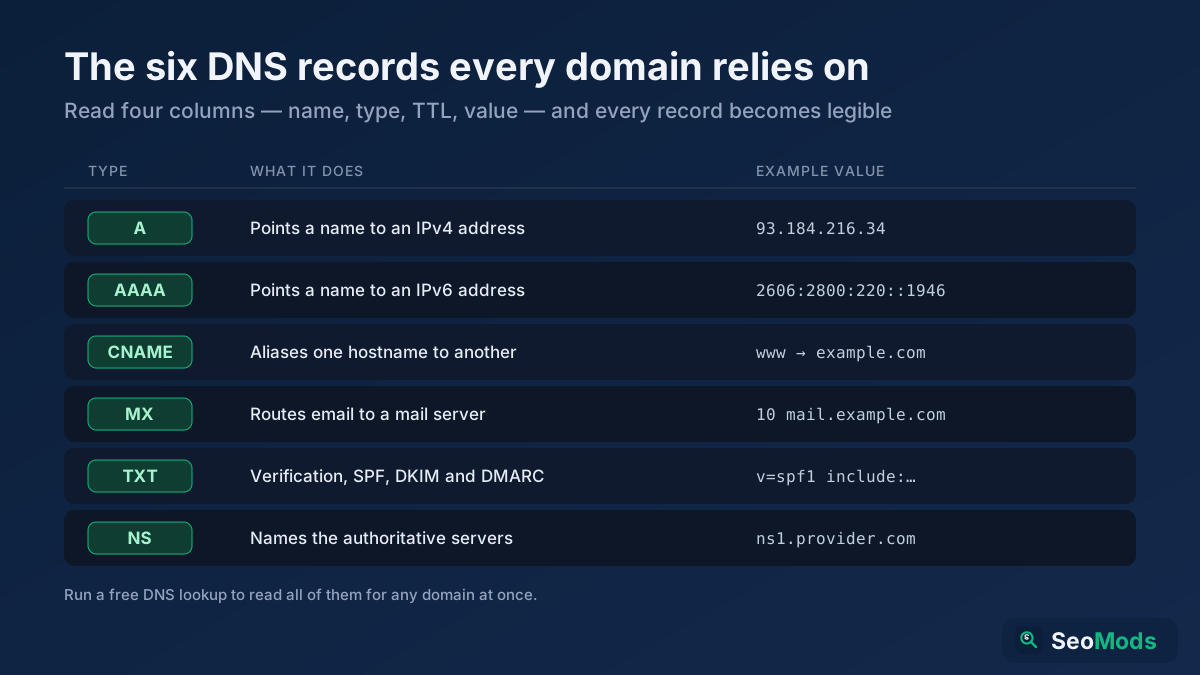
The DNS Records Lookup is a free tool that queries the live DNS records for any domain and returns them exactly as resolvers see them right now — A, AAAA, MX, NS, TXT, CNAME, SOA and SRV. Instead of waiting on a hosting dashboard to refresh, you get the actual published values in seconds, which makes it easy to verify a migration, confirm an email setup or debug a record that is not resolving. No signup, no limits, just real data.
example.com).Look up example.com and you might see two A records pointing to its CDN, an MX record routing mail to a provider, an SPF string in TXT, and the zone's authoritative NS records — everything you need to confirm the domain is wired up correctly.
Yes — completely free, with no signup and no usage limits. Query as many domains and record types as you like.
DNS changes take time to propagate based on the record's TTL and resolver caching. The tool reads live records, but a recently edited record may still be cached by some resolvers for minutes to hours.
Use the WHOIS Lookup to see who registered the domain and when it expires, and the SSL Certificate Checker to verify the TLS certificate on the resolved host. For email-record fundamentals, see our technical SEO audit checklist.
Guides, tips and tutorials hand-picked for this tool — go from running a check to actually fixing it.
Google indexes the mobile version of your site. If mobile is weaker than desktop, rankings suffer.
Read article →DNS records are the hidden settings that route a domain's traffic, email and verification. Here is what A, AAAA, CNAME, MX, TXT and NS records do, how to read them, and how to check each one for free.
Read article →A WHOIS lookup reveals a domain's registrar, creation and expiry dates, name servers and — when it is not hidden by privacy — its owner. Here is what a WHOIS record means, how to find who owns a domain, and what to do when the owner is redacted.
Read article →HTTPS is a ranking signal and a trust requirement. Here is how to migrate safely.
Read article →Faster pages rank better and convert better. Here is a prioritized checklist that actually moves the needle.
Read article →Crawlability, indexability, speed and structured data — the technical foundations that let your content rank.
Read article →Retrieve real domain registration data: registrar, creation/expiry dates, name servers and status.
Open tool →Inspect the live TLS certificate: issuer, validity dates, days remaining and SAN domains.
Open tool →View raw response headers, server software, caching, security headers and content type of any URL.
Open tool →Trace the full redirect chain (301/302/307) of a URL and verify the final status code.
Open tool →Resolve a domain/IP and get real geolocation, ISP, ASN and hosting organization data.
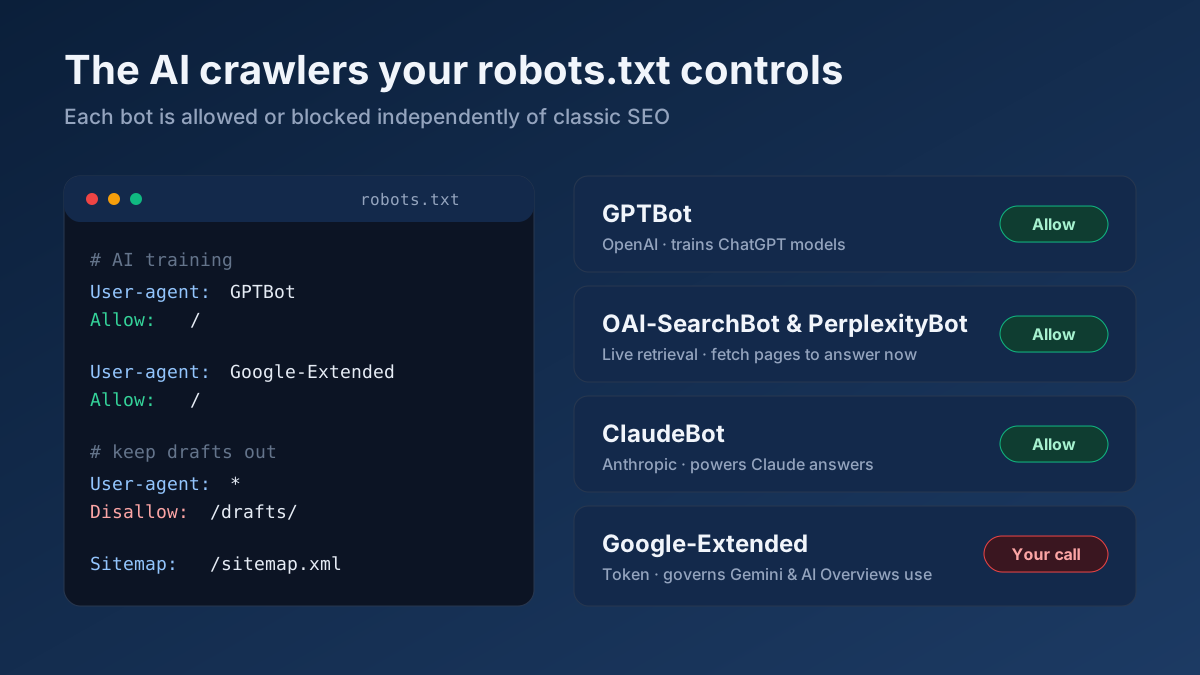
Open tool →Fetch and parse a site’s robots.txt, list rules per user-agent and locate sitemap declarations.
Open tool →