⚡
Quick answer
The HTTP Header Checker is a free tool that requests any URL and shows you the raw response headers the server sends back — exactly what a browser or crawler receives before the page even renders. From a single request you can read the status code, server software, content type, caching directives, compression and the security headers that protect your visitors. It is the fastest way to confirm how a URL really behaves, using live data with no signup and no limits.
How it works
- Enter the full URL you want to inspect (for example
https://example.com). - The tool sends a real HTTP request to the server, just as a crawler would.
- It captures the complete set of response headers the server returns.
- You get the raw headers plus a parsed view of the key fields, all from live data.
What it shows
- Status code — the HTTP response code such as
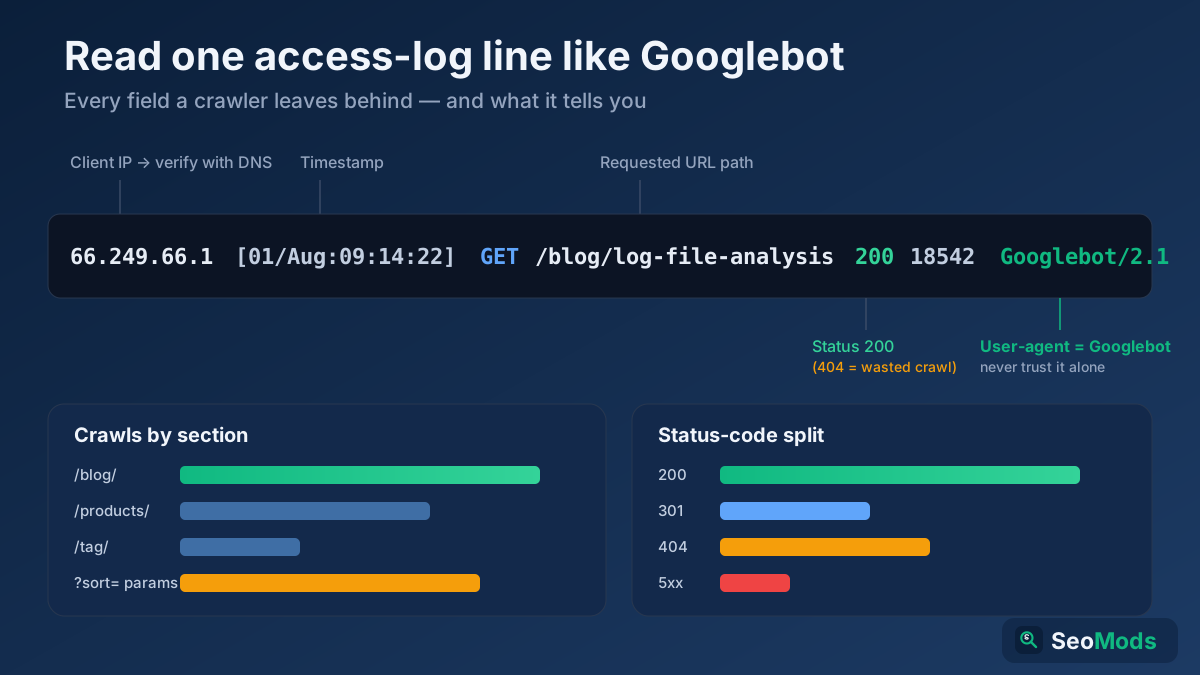
200, 301 or 404. - Server — the web server software, such as nginx or Apache.
- Content-Type — the MIME type and character encoding of the response.
- Caching headers —
Cache-Control, ETag and Expires directives. - Compression — whether
Content-Encoding uses gzip or brotli. - Security headers — HSTS,
Content-Security-Policy, X-Frame-Options and more. - Redirect location — the
Location header when a redirect is returned. - Indexing hints — an
X-Robots-Tag header if one is present.
Common use cases
- Confirming caching — verify
Cache-Control and compression are set for speed. - Auditing security — check that HSTS and a content-security policy are in place.
- Debugging status codes — see whether a URL returns 200, a redirect or an error.
- Checking indexability — catch a stray
X-Robots-Tag: noindex at the header level.
Example
Inspect https://example.com and you might see a 200 status from nginx, Content-Encoding: gzip, a long Cache-Control max-age and a Strict-Transport-Security header — confirmation the page is served fast, compressed and over enforced HTTPS.
Frequently asked questions
Is the HTTP Header Checker free?
Yes — completely free, with no signup and no usage limits. Inspect as many URLs as you need.
Why do response headers matter for SEO?
Headers control caching, compression and security, which all affect page speed and trust. A header-level X-Robots-Tag can also block indexing silently, so reading the raw headers helps you catch issues the page HTML never reveals.
How is this different from checking redirects?
This tool shows the full header set for a single response. To follow a chain of redirects end to end, use the Redirect & HTTP Status Checker; to confirm the TLS certificate behind HTTPS, use the SSL Certificate Checker and learn more in our Core Web Vitals guide. Headers also reveal the software behind a site — for the full stack, try the website technology checker.