How to Write Blog Posts That Rank on Google
How to write blog posts that rank: pick a winnable question, build the outline from the SERP, answer in the first 100 words, and update before it decays.
Read article →Understand what a searcher really wants. Analyzes a query’s primary and secondary intent, maps it to a funnel stage, recommends the content type and the SERP features it’s likely to trigger, and shows real related queries with their own intent — so your page matches what Google rewards.
Fetching live data…
The Search Intent Analyzer takes one query and tells you what the searcher actually wants. Instead of guessing, you get the primary intent — informational, navigational, commercial or transactional — plus any secondary intent hiding underneath it. It maps the query to a funnel stage, recommends the content type most likely to satisfy it, predicts the SERP features Google will trigger, and surfaces real related queries with their own intent. In short, it shows you exactly what a winning page for this query must deliver.
Google ranks the page that best matches intent, not the one with the most keywords. A technically flawless article can still fail if it answers the wrong question — writing a buyer's guide for a query that wants a quick definition, or a thin blog post for a query that expects a comparison table. Intent mismatch is one of the most common reasons well-optimized pages never break the first page. Knowing the intent, funnel stage and SERP features up front lets you build the exact page shape Google is already rewarding, instead of reverse-engineering it after months of underperformance.
Match your page format to the recommended content type first: a decision-stage transactional query needs a fast landing or product page, while an awareness-stage informational query needs a thorough guide. Shape your headings and opening passage to the SERP features shown — write a concise answer to win the snippet, and add an FAQ block to earn People Also Ask slots. Then weave the related queries and their intents into subheadings so one page satisfies the whole cluster rather than a single phrase, strengthening topical depth and internal relevance.
The Keyword Intent Classifier bulk-labels a whole list of keywords with a single intent each, ideal for sorting large sets fast. The Search Intent Analyzer goes deep on one query instead — primary plus secondary intent, funnel stage, content type, likely SERP features and related queries. Use it when you're planning the page behind a specific target term.
Many searches carry layered motivation. "Best running shoes" is commercially driven research but also signals an intent to buy soon. Capturing both the primary and secondary intent stops you from building a page that satisfies only half the searcher's goal, which is a frequent cause of high bounce and weak rankings.
No. The tool predicts the features a query is most likely to trigger based on its intent and phrasing patterns, not a live SERP scrape. Treat them as a strong signal of the format to build for — for example, structuring a direct answer when a featured snippet is likely — rather than a fixed promise.
Guides, tips and tutorials hand-picked for this tool — go from running a check to actually fixing it.
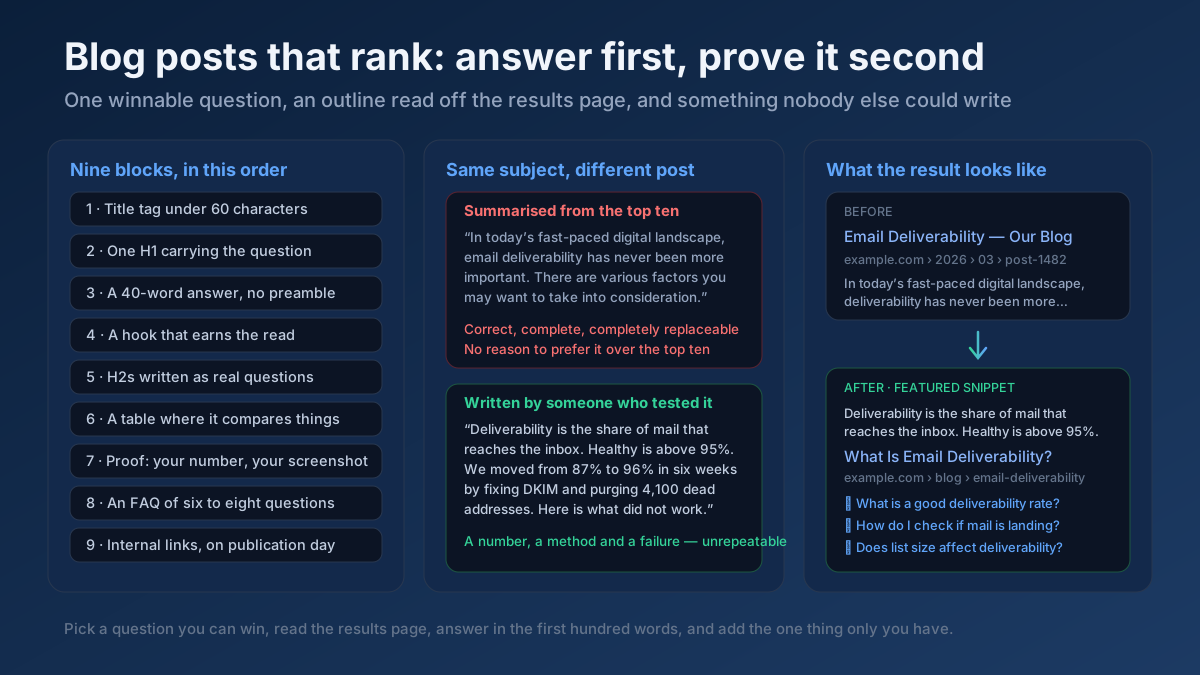 Content
How to write blog posts that rank: pick a winnable question, build the outline from the SERP, answer in the first 100 words, and update before it decays.
Read article →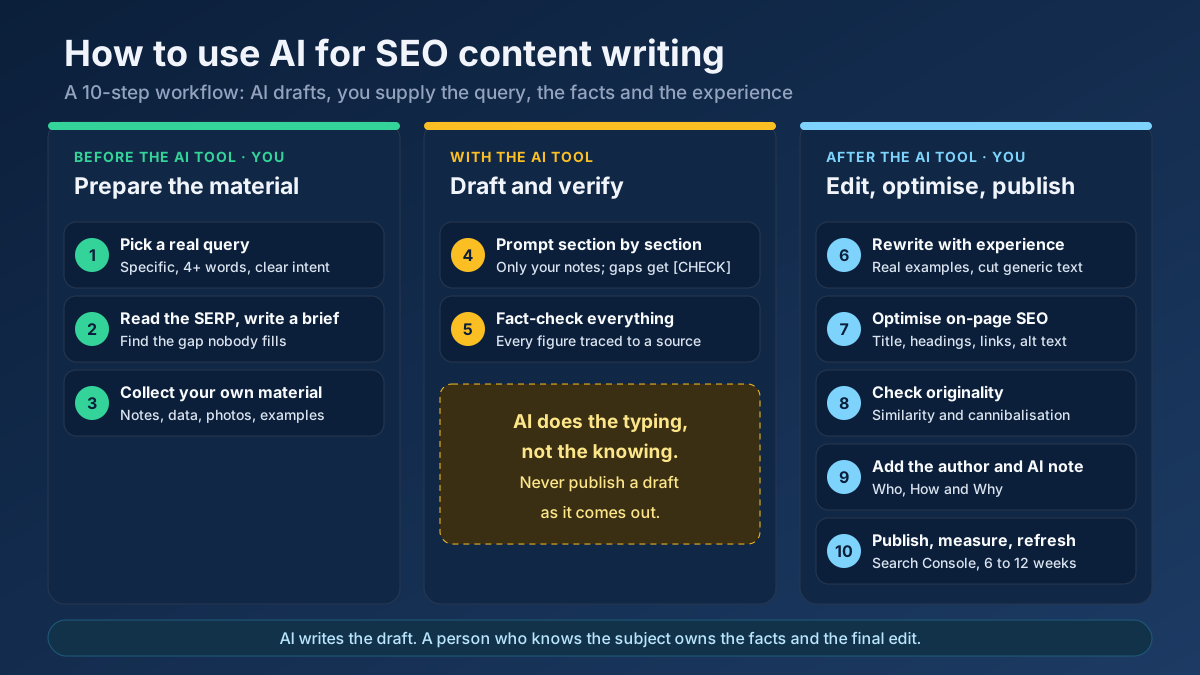 Content
Learn how to use AI for SEO content writing without risking a penalty: a 10-step workflow for briefs, drafts, fact-checks, editing and E-E-A-T signals.
Read article →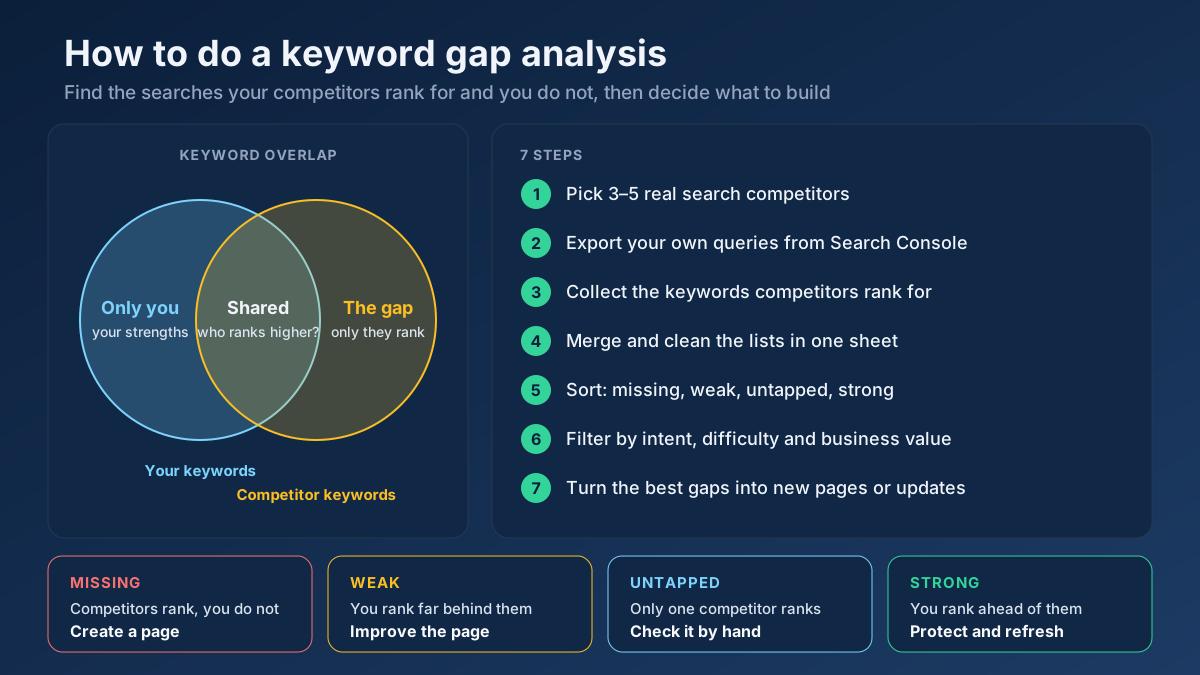 Keyword Research
Learn how to do a keyword gap analysis in 7 steps: find the keywords competitors rank for and you don’t, sort the gaps, then turn them into a content plan.
Read article →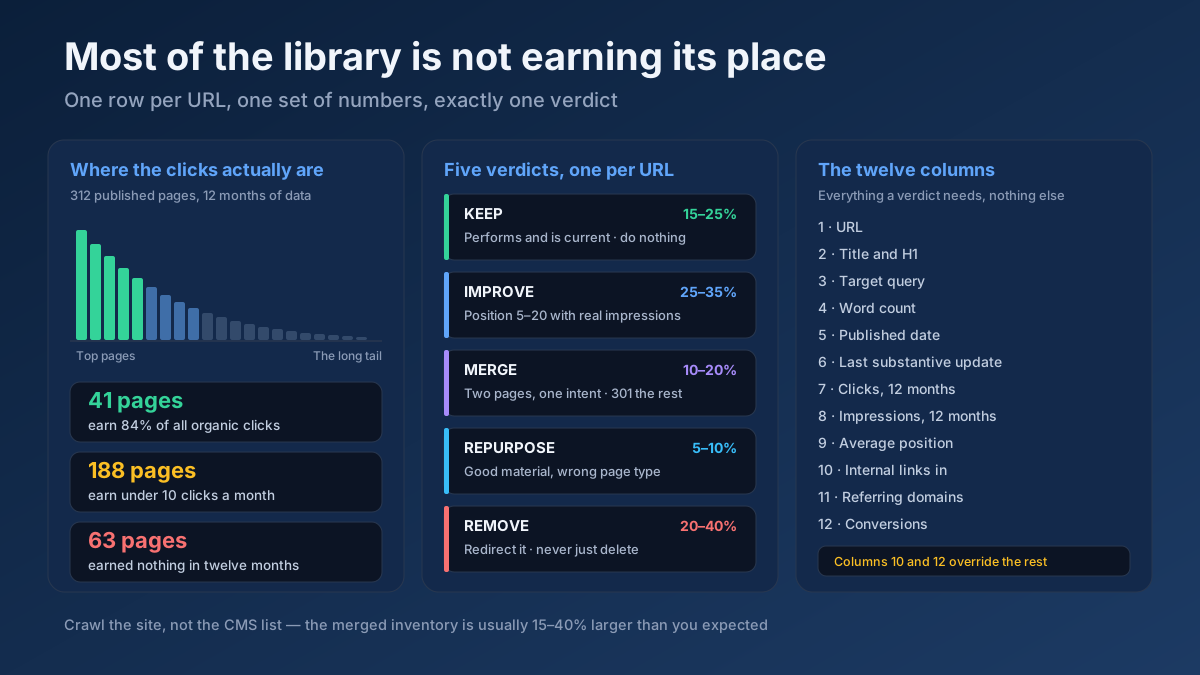 Content
How to do a content audit for SEO in 10 steps: inventory every URL, attach 12 months of data, then decide what to keep, improve, merge, repurpose or remove.
Read article →When multiple pages target the same keyword, they compete with each other and dilute rankings. Here is the fix.
Read article →Updating old content is often the highest-ROI SEO task. Here is a simple refresh workflow.
Read article →Turn one seed into hundreds of scored keyword ideas. Pulls live Google, YouTube, Bing and DuckDuckGo autocomplete, scores every phrase for demand, difficulty and opportunity, labels intent and funnel stage, groups everything into pillar-and-spoke topic clusters and adds a real 13-month interest trend from Wikipedia.
Open tool →Get instant keyword ideas straight from Google Autocomplete with A-Z & question modifiers.
Open tool →Turn one seed into clustered content ideas: questions, comparisons, prepositions — perfect for content calendars.
Open tool →Classify any keyword as Informational, Navigational, Commercial or Transactional using real signal patterns.
Open tool →Turn one seed keyword into semantic clusters ready for content planning. Expands your seed with real Google Autocomplete queries, groups them into topic clusters by shared terms, labels each cluster’s search intent and charts the distribution — so you can build a hub-and-spoke content architecture.
Open tool →Classify a whole keyword list by search intent in one pass. Labels each keyword Informational, Commercial, Transactional or Navigational, maps it to a funnel stage (ToFu/MoFu/BoFu) and the best content type, and charts the intent distribution — perfect for prioritizing a content calendar.
Open tool →Your site may have a critical PHP vulnerability
PHP2Shell (CVE-2026-109618 and CVE-2026-109619) lets attackers run code on servers running PHP older than 8.2.35, 8.3.36, 8.4.27 or 8.5.12, without logging in. Attacks have been seen since 17 October. Check whether your site is affected.