No Signup Unlimited Usage Real Data 100% Free Privacy First Fast Results Export Reports Mobile Friendly

Keyword Rank Checker

Estimate where a domain ranks for a keyword by analyzing on-page relevance signals against the target term.

Note: free public sources cannot return the proprietary index data that paid platforms charge for. This tool computes the best possible result from real, live signals and clearly labels any estimated values.

Fetching live data…

Quick answer

The Keyword Rank Checker is a free tool that estimates how well a domain is positioned to rank for a given keyword by analyzing the page's on-page relevance signals against that target term. Rather than scraping live Google results — which is unreliable and against the terms free tools must follow — it fetches the page, measures how strongly the keyword appears in the elements that matter (title, headings, URL, body), and returns a relevance-based estimate of ranking readiness, with no signup required.

How it works

  1. Enter a domain or page URL and the keyword you want to rank for.
  2. The tool fetches the live page and parses its title, headings, URL and main content.
  3. It scores how well the keyword and its variants are reflected across those on-page signals.
  4. You get an estimated ranking-readiness score plus the specific factors helping or hurting relevance.

What it shows

  • Relevance score — an estimate of how well the page matches the target keyword.
  • Title match — whether and how prominently the keyword appears in the title tag.
  • Heading match — keyword presence in the H1 and subheadings.
  • URL match — whether the slug reflects the target term.
  • Body usage — how naturally the keyword and variants appear in the content.
  • Coverage gaps — on-page elements where the keyword is missing.
  • Quick wins — the changes most likely to improve relevance.
The position here is an estimate based on on-page relevance, not a live Google rank. Actual rankings also depend on backlinks, authority, competition, personalization and location, which a free tool cannot read. Use this to judge relevance readiness, then confirm true positions in Google Search Console.

Common use cases

  • Pre-launch relevance check — confirm a page clearly targets its keyword before publishing.
  • Diagnosing weak pages — see why a page may not be relevant enough to rank.
  • Optimization passes — find the exact on-page elements to strengthen.
  • Competitor comparison — gauge how focused a rival page is on the same term.

Example

Check a page for standing desk reviews and the tool might return a relevance score of 64/100 — strong title and URL matches, but the keyword is missing from every H2 and appears only twice in the body. The suggested quick wins point you to the headings and content to revise.

Frequently asked questions

Why is this an estimate and not my live Google position?

Reliable live rank data requires scraping Google at scale, which is against its terms and unstable for a free tool. Instead this measures real on-page relevance signals — a fast, honest proxy for ranking readiness. Confirm exact positions in Google Search Console.

What actually determines my real ranking?

Relevance is only part of it; authority, backlinks and competition matter too. Strengthen on-page focus with the On-Page SEO Checker (Keyword) and check term frequency with the Keyword Density Checker.

How do I track real positions over time?

Use Google Search Console for true, personalized-free position data. Learn to read it in our measuring SEO with Search Console guide.

How do I check my SEO ranking online for free?

Enter a domain and a keyword and this free online SEO rank checker estimates the position from on-page relevance signals. Because live Google results vary by location and personalization, confirm exact average position in Search Console.

Learn & Resources

Guides, tips and tutorials hand-picked for this tool — go from running a check to actually fixing it.

On-Page SEO
Jul 10, 2026 · 15 min read

What Is SEO? A Complete Guide for Beginners

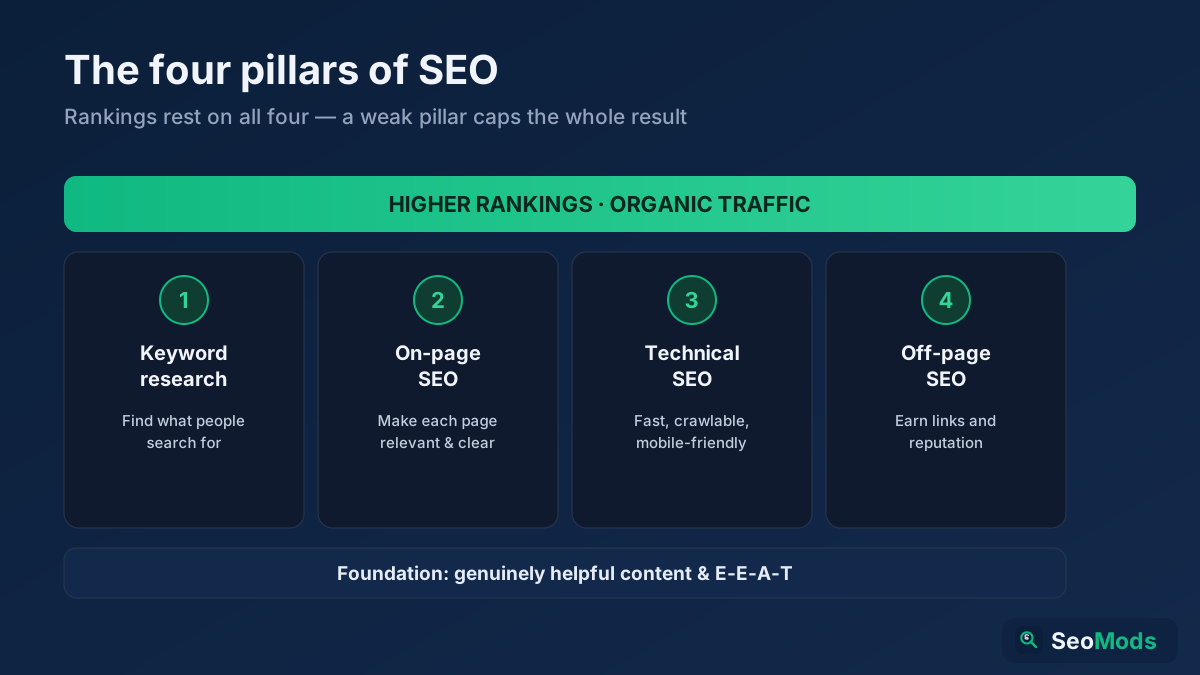
SEO is how you make a website rank higher in search engines so it earns free, organic traffic. This complete beginner's guide explains what SEO is, how search engines work, the four pillars (keyword research, on-page, technical and off-page), GEO for AI search, and a simple step-by-step roadmap you can start today.

Read article →
Analytics
Jul 15, 2026 · 15 min read

How Long Does SEO Take to Work? A Realistic Timeline (2026)

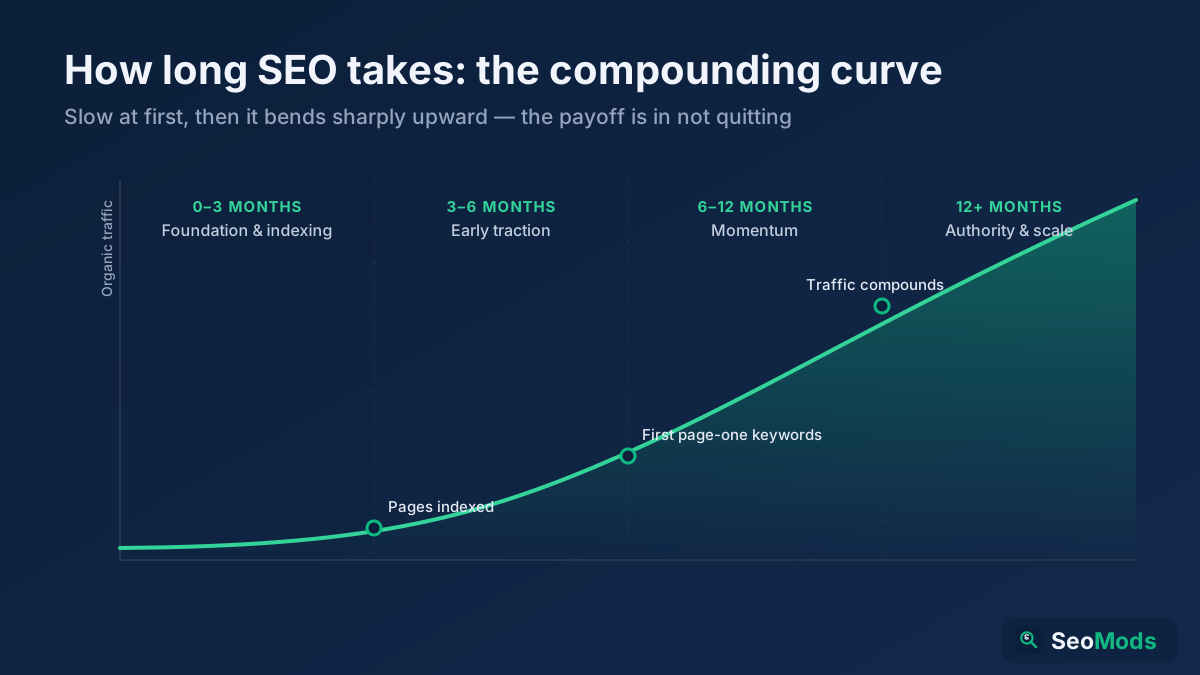
SEO takes four to six months to show meaningful movement and six to twelve months to produce significant organic traffic — faster for technical fixes and established sites, slower for new domains in competitive niches. This 2026 guide gives a realistic month-by-month timeline, the seven factors that decide your pace, how to speed things up, and how to measure progress before your rankings even move.

Read article →