No Signup Unlimited Usage Real Data 100% Free Privacy First Fast Results Export Reports Mobile Friendly

Keyword Density Checker

Analyze real word & phrase frequency (1, 2 and 3-word) of any page to spot keyword stuffing or gaps.

Fetching live data…

Quick answer

The Keyword Density Checker analyzes the real word and phrase frequency of any live page so you can spot keyword stuffing or thin coverage at a glance. It fetches the page, strips out the HTML and counts how often each one-, two- and three-word phrase appears in the visible text. Everything comes from real, live data — nothing is estimated — so you see exactly which terms a page emphasizes and whether that balance looks natural.

How it works

  1. Paste the URL of the page you want to analyze (for example https://example.com/page).
  2. The tool fetches the live page and extracts only the readable body text.
  3. It tokenizes the words and counts single words, two-word and three-word phrases.
  4. You get ranked frequency tables with counts and density percentages for each.

What it shows

  • Single-word frequency — the most-used individual terms on the page.
  • Two-word phrases — common bigrams that reveal the page's focus.
  • Three-word phrases — longer trigrams that surface specific topics.
  • Count per term — exactly how many times each word or phrase occurs.
  • Density percentage — each term's share of the total word count.
  • Total word count — the overall length of the readable content.
  • Stuffing signals — terms that appear unnaturally often.

Common use cases

  • Catching keyword stuffing — find terms repeated so often they risk a penalty.
  • Checking topical focus — confirm the page emphasizes the right subject.
  • Comparing with competitors — see which phrases ranking pages lean on.
  • Editing thin content — spot where a target term barely appears.

Example

Run a blog post and you might see running shoes appearing 14 times at 2.1% density, while your intended phrase trail running shows up just twice — a clear sign to strengthen the secondary topic without over-using the primary one.

Frequently asked questions

Is the Keyword Density Checker free?

Yes — completely free, no signup and no limits. Analyze as many pages as you like with real, live data.

What is a good keyword density?

There's no magic number, but most natural pages keep a primary term well under 2–3%. Anything dramatically higher reads as stuffing. Aim for natural language and let the term appear where it fits — depth and relevance matter more than a target percentage.

How does this connect to on-page optimization?

Pair it with the On-Page SEO Checker (Keyword) to grade a page against one keyword, and the Heading Structure Analyzer to confirm structure. Learn how it all fits together in our on-page SEO guide.

Learn & Resources

Guides, tips and tutorials hand-picked for this tool — go from running a check to actually fixing it.

On-Page SEO
Jul 10, 2026 · 15 min read

What Is SEO? A Complete Guide for Beginners

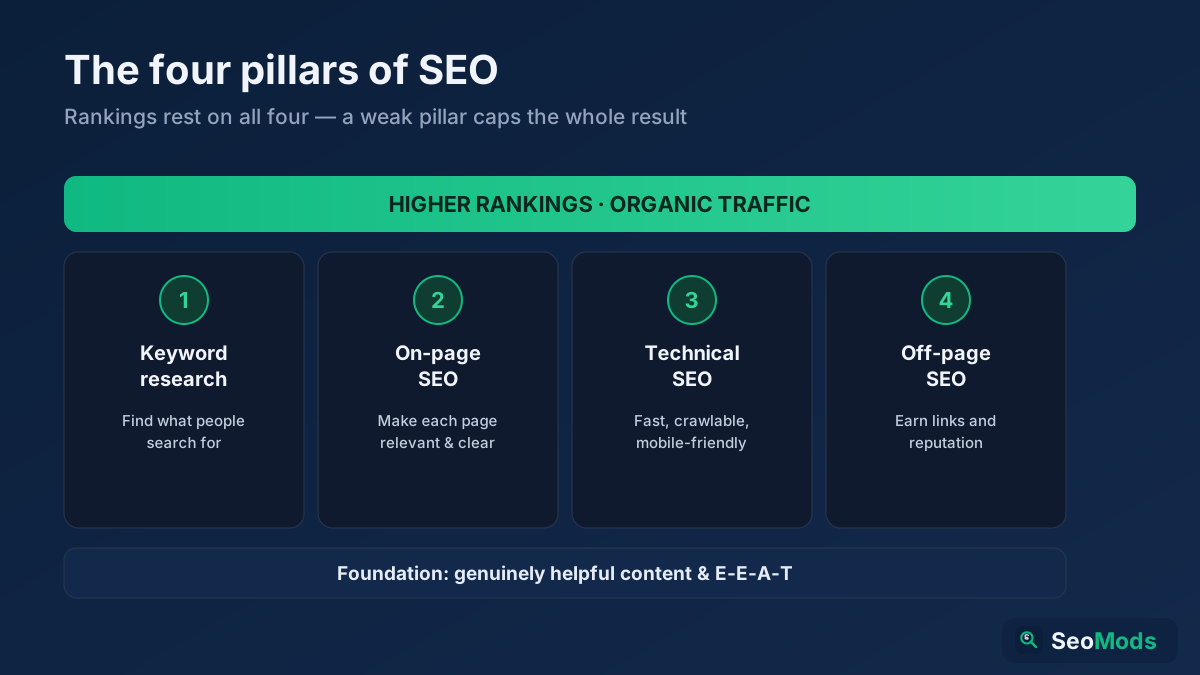
SEO is how you make a website rank higher in search engines so it earns free, organic traffic. This complete beginner's guide explains what SEO is, how search engines work, the four pillars (keyword research, on-page, technical and off-page), GEO for AI search, and a simple step-by-step roadmap you can start today.

Read article →
Analytics
Jul 15, 2026 · 15 min read

How Long Does SEO Take to Work? A Realistic Timeline (2026)

SEO takes four to six months to show meaningful movement and six to twelve months to produce significant organic traffic — faster for technical fixes and established sites, slower for new domains in competitive niches. This 2026 guide gives a realistic month-by-month timeline, the seven factors that decide your pace, how to speed things up, and how to measure progress before your rankings even move.

Read article →