High Impressions but Low Clicks: How to Fix CTR
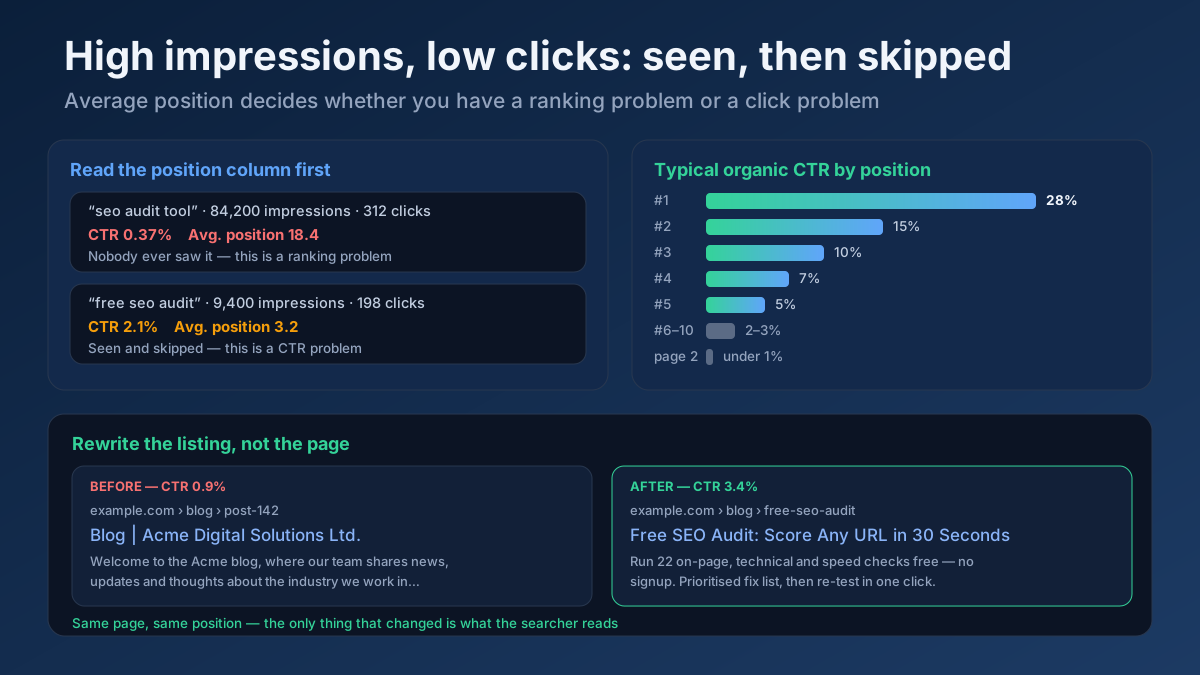
High impressions but low clicks? Average position tells you whether it is a ranking problem or a snippet problem — and this guide gives the fix for both.
Read article →Check real Domain Authority (DA) and Page Authority (PA) for any website, built on real link-graph authority data. See the raw authority index and global rank, and compare up to 20 domains at once — free, with no signup.
Fetching live data…
The DA / PA Checker is a free tool that measures the authority of any website using real data. It reports a domain's Domain Authority (DA) and Page Authority (PA) on a familiar 0–100 scale, along with its raw authority index (0–10) and its global rank. The scores are built on real link-graph authority data, so you get genuine authority signals with no signup and no per-check fees.
Domain Authority (DA) is a 0–100 score that predicts how well an entire website can rank in search results — higher is stronger. Page Authority (PA) is the same idea for a single page rather than the whole domain. Both are comparative metrics: they are most useful when you benchmark your site against competitors, not as an absolute guarantee of rankings. Google does not use DA or PA directly; they are third-party estimates of overall link authority.
yoursite.com and a few competitors.Enter your domain plus three competitors. The tool might return your site at DA 24, two rivals at DA 41 and DA 58, and a fourth at DA 12. Now you know exactly which competitors out-rank you on authority and by how much — a clear signal to prioritize link building, and a realistic view of which SERPs you can compete in today.
Yes. It is completely free and needs no signup. It runs on real link-graph authority data rather than a paid API, so there are no per-check credits to buy.
Domain Authority is derived from a real authority index built on the web's link graph, then scaled to a familiar 0–100 range so it is easy to read and benchmark. Page Authority applies the same idea to a single URL, factoring in crawl depth and HTTPS. Both are independent, comparative estimates of link authority — a practical, no-cost way to size up any site.
Yes. Domain Authority and global rank come from live link-graph data, not random numbers. Page Authority is a transparent composite of that real domain authority and page-level signals, because free page-level authority indexes don't exist.
Authority is driven mainly by the quantity and quality of other sites linking to you. New domains, sites with few backlinks, or sites linked only from low-authority pages score lower. Earning links from trusted, relevant sites is the reliable way to raise it — verify who links to you with the Backlink Checker / Verifier and find new prospects with the Link Intersect / Backlink Gap.
Up to 20 domains or URLs in a single run — one per line. Results are sorted from highest to lowest authority so the leaders and laggards are instantly clear.
No. DA and PA are useful relative signals, but Google ranks pages on relevance, content quality, intent match and hundreds of other factors. Use authority alongside on-page work — study a competitor's full profile with the Site Explorer and check a domain's history with the Domain Age Checker.
The underlying authority index refreshes periodically rather than in real time, so authority changes gradually. This tool caches results briefly to stay fast; expect scores to move over weeks as your link profile changes, not day to day.
Guides, tips and tutorials hand-picked for this tool — go from running a check to actually fixing it.
 Analytics
High impressions but low clicks? Average position tells you whether it is a ranking problem or a snippet problem — and this guide gives the fix for both.
Read article →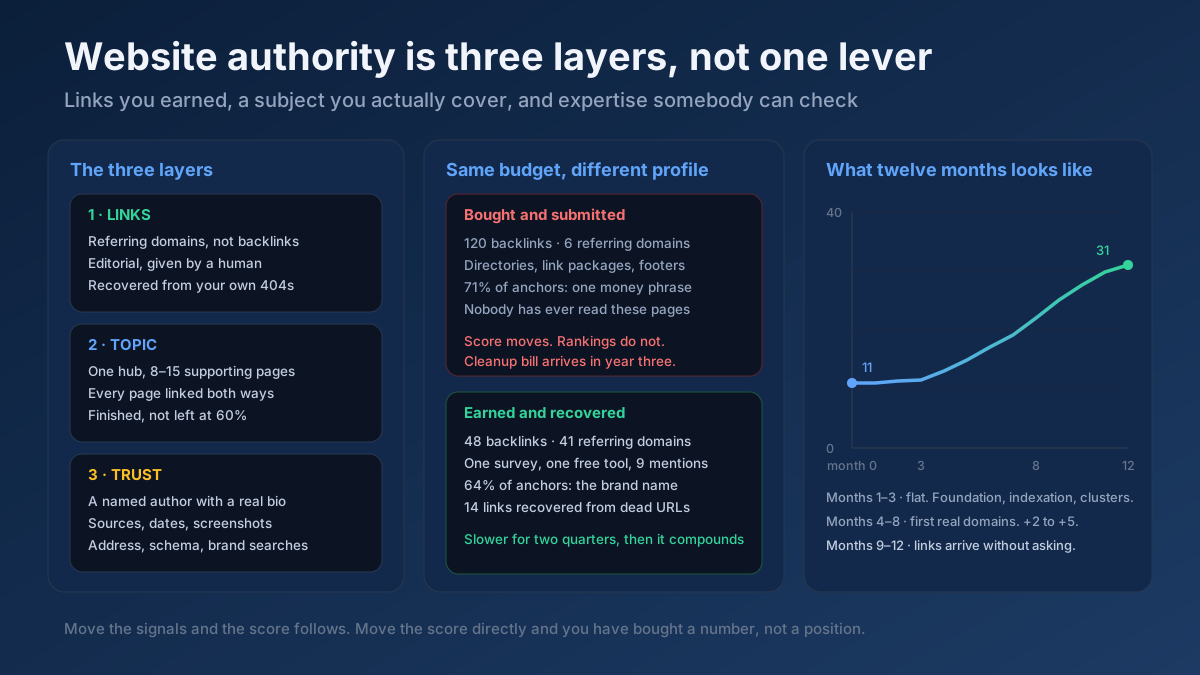 Link Building
How to increase website authority in 10 steps: what the score really measures, the link and content work that moves it, and how long each stage takes.
Read article →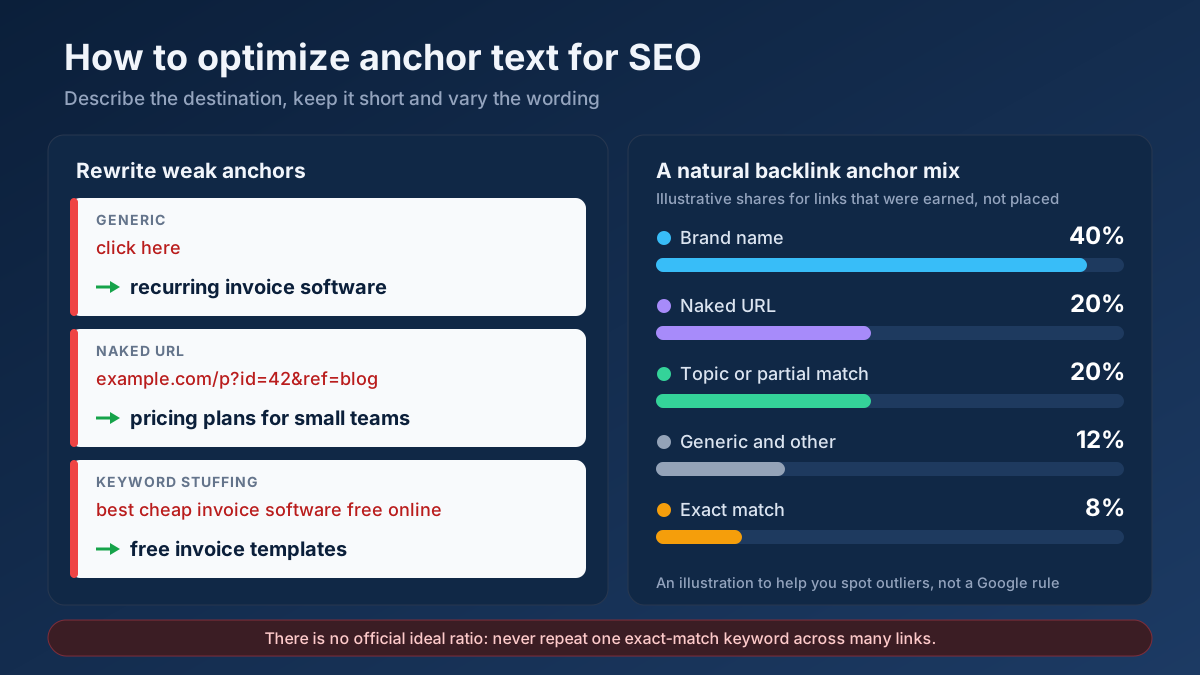 Link Building
How to optimize anchor text for SEO in 9 steps: anchor types, internal link and backlink rules, a natural ratio, rewrite examples and mistakes to avoid.
Read article →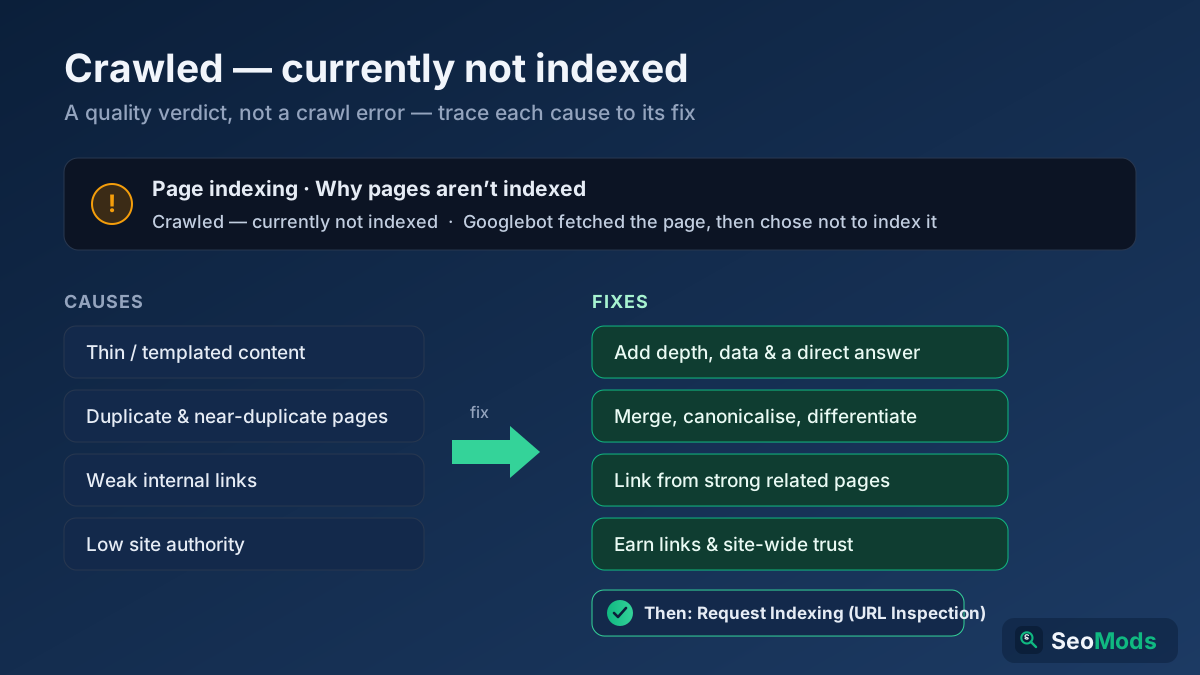 Analytics
Google visited your page but chose not to index it. Here is what that status really means and a prioritized checklist to earn the index spot back.
Read article →Spammy links can drag your site down. Here is how to identify and disavow them safely.
Read article →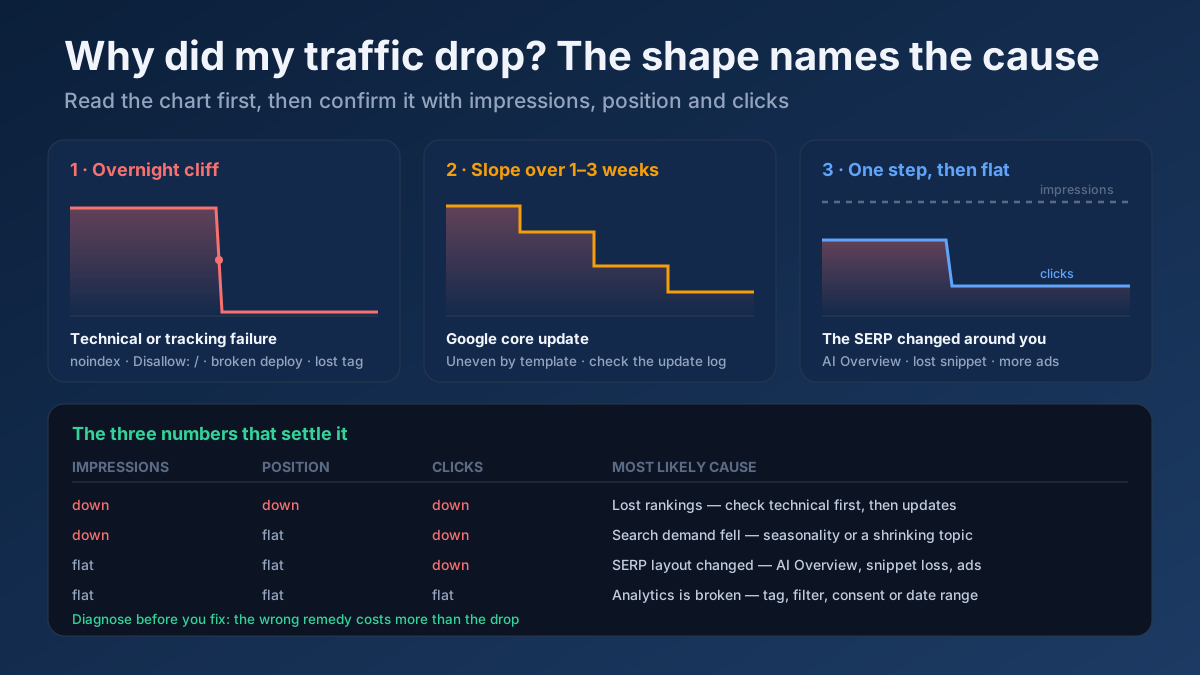 Analytics
Organic traffic drops for seven reasons. Read the shape of the drop, segment it in Search Console, and follow the recovery playbook for your actual cause.
Read article →Full technology & SEO profile of any website (Wappalyzer + BuiltWith style): CMS, theme, plugins, framework, JS & CSS libraries, CDN, hosting, analytics, tag managers, ads, fonts, cookie tools, schema, Open Graph, security headers, HTTP version, SSL, WHOIS, DNS, IP, country and on-site SEO signals.
Open tool →Pull a domain’s most important pages from its sitemap and analyze the topics & keywords they target.
Open tool →See which domains link to any site, ranked by authority, from our own growing link index — then verify live whether specific pages really link to you, with anchor text, rel and status.
Open tool →Paste your backlink list (e.g. from Search Console) and flag toxic, spammy or risky links with a toxicity score.
Open tool →Compare outbound link profiles of two competitor pages to find linking domains you could also target.
Open tool → EstimateEstimate where a domain ranks for a keyword by analyzing on-page relevance signals against the target term.
Open tool →