⚡
Quick answer
The Thin Content Checker tells you whether a page reads as thin, low-value content to search engines. It fetches your URL, extracts the real body text, then measures word count, text-to-HTML ratio, unique vocabulary, heading structure, supporting media and internal links. From those signals it returns a plain substance verdict — Thin, Borderline or Substantial — with prioritized fixes. In short, it shows exactly why a page might be judged too light to rank and what to add so it earns its place in the index.
How it works
- Enter the URL of the page you want to test — the tool fetches the live HTML and reads the rendered markup.
- It strips navigation, boilerplate and code, then isolates the main body text the way a search engine would.
- It measures the core signals — real word count, text-to-HTML ratio, unique-word vocabulary, heading depth, and the count of supporting images and internal links.
- Each signal is weighed against thin-content thresholds so weak areas are flagged rather than hidden in an average.
- You get a Thin / Borderline / Substantial verdict plus a concrete fix list telling you what to expand, restructure or enrich.
What it measures
- Word count — the real body-text length after boilerplate is removed, compared against thresholds for the page's purpose.
- Text-to-HTML ratio — how much of the page is genuine content versus markup, scripts and layout code.
- Unique vocabulary — the share of distinct words, flagging padded or repetitive copy that inflates length without adding value.
- Heading structure — whether an H1 and logical H2/H3 subheadings give the content real depth and organization.
- Supporting media — the presence of images or other assets that enrich the text and signal a fuller page.
- Internal links — outbound links to your own pages that show the content is connected, not an orphaned dead end.
Why it matters
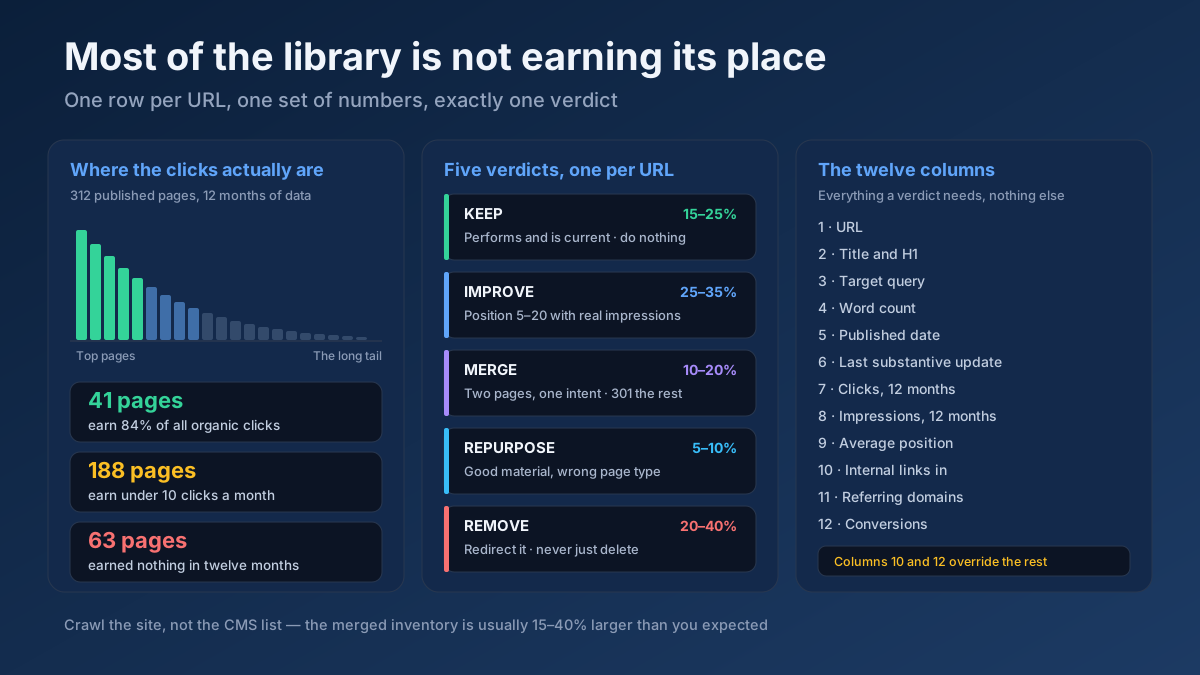
Thin content is one of the most common reasons pages fail to rank. Google's Helpful Content system rewards substance and quietly suppresses pages that add little value, while thin URLs often end up Crawled — currently not indexed, meaning they never appear in results at all. Publish enough of them and you invite index bloat, where low-value pages dilute your site's overall quality signals and waste crawl budget. Knowing which pages read as thin before Google decides for you lets you fix or consolidate them first.
How to fix thin content
Start by expanding the body text with genuinely useful detail — examples, specifics and answers to real questions — rather than padding it with filler. Break the page into clear H2/H3 sections so it gains structure and depth, and add supporting images, tables or examples that enrich the topic. Weave in internal links to related pages so the content sits inside your site's architecture. Where a page can't be strengthened, merge it into a stronger one or remove it. Re-run the checker after editing to confirm the verdict has moved toward Substantial.
Frequently asked questions
What counts as thin content?
Thin content is any page that offers little unique value — very low word count, padded or duplicated copy, a poor text-to-HTML ratio, or no supporting structure and media. It is not strictly about length; a short page can be substantial if it fully answers its intent, while a long, repetitive one can still read as thin.
How many words does a page need?
There is no fixed minimum. The right length is whatever fully satisfies the page's intent, so the checker compares your word count against thresholds rather than demanding a single number. Use the verdict as a signal to add substance where it is genuinely missing, not to hit an arbitrary target.
Does thin content hurt my whole site?
It can. A cluster of thin, low-value pages weakens your site's overall quality signals and wastes crawl budget, an effect known as index bloat. Fixing, consolidating or removing them helps your stronger pages rank by concentrating quality rather than spreading it thin.