⚡
Quick answer
The Author Page Audit grades how strongly a single author or bio page proves the person behind your content is real, qualified and trusted. It fetches the live page and checks the E-E-A-T signals Google and AI engines look for — a genuine photo, Person schema, a substantial bio, stated credentials, linked social and professional profiles, links to authored articles, and outbound authority. You get an authority score out of 100 with a prioritized list of concrete improvements. In short, it tells you whether your author page builds trust or leaves it unproven.
How it works
- Enter the URL of an author or bio page — the tool fetches the live HTML and reads the rendered content.
- It looks for a real author photo and for Person schema (JSON-LD) that names the individual and ties the page to a defined entity.
- It measures bio depth, scans for stated credentials and experience, and detects sameAs links to social and professional profiles.
- It checks for links to the articles the author has written and for outbound links to authoritative sources that back up their expertise.
- Every signal is weighted and rolled into an authority score, with each gap paired to a concrete improvement you can make.
What it checks
- Author photo — whether a genuine headshot is present, signalling a real, identifiable person rather than an anonymous byline.
- Person schema — Person JSON-LD that names the author and connects the page to a machine-readable entity.
- Bio depth — a substantial biography that explains who the author is, what they do and why they are qualified.
- Stated credentials — explicit experience, qualifications, roles or awards that establish first-hand expertise.
- Linked profiles (sameAs) — links to social and professional profiles that let engines verify the person across the web.
- Authored links and authority — links to the articles the author wrote plus outbound links to trustworthy sources.
Why it matters
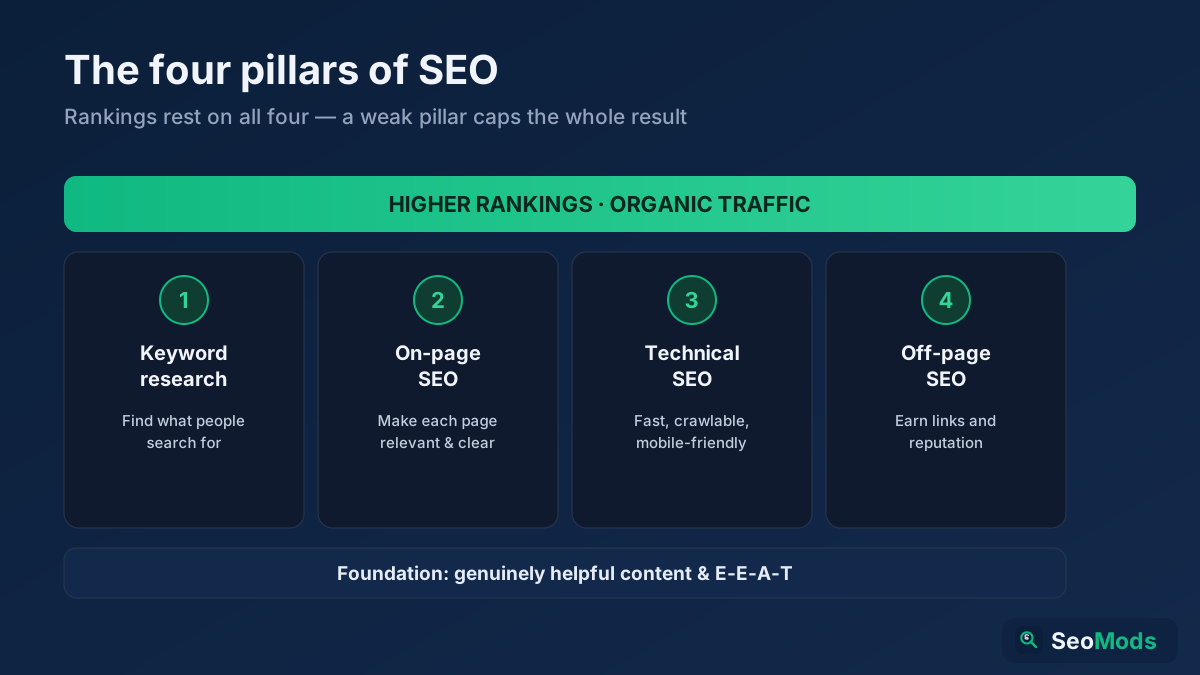
Google's E-E-A-T guidance rewards content produced by real, demonstrably experienced people, and AI engines increasingly attribute answers to named authors they can verify. A thin author page — no photo, a one-line bio, no schema, no profiles — leaves your expertise unproven, which is especially damaging on YMYL topics like health, finance and law where trust is decisive. A strong author page establishes a clear Person entity, connects it across the web, and shows the track record behind the byline, lifting the credibility of every article that person signs.
How to strengthen your author pages
Add a real headshot and a bio that states the author's experience, qualifications and focus in concrete terms. Mark the page up with Person JSON-LD, including a sameAs array linking to their LinkedIn, professional bodies and social profiles so engines can verify the entity. Link to the articles they have written and to authoritative outbound sources that support their claims. Keep credentials specific — years, roles, certifications, notable work — not vague adjectives. Re-run the audit after each change to watch the authority score climb.
Frequently asked questions
What is E-E-A-T and how does an author page affect it?
E-E-A-T stands for Experience, Expertise, Authoritativeness and Trustworthiness — the qualities Google's raters use to judge content. A strong author page supplies the evidence: who wrote the content, their real-world experience, and verifiable proof they are qualified to cover the topic.
Do I need Person schema on an author page?
It is strongly recommended. Person JSON-LD names the author, describes their role and links out via sameAs, giving search and AI engines a machine-readable entity to attach to. Without it, engines must guess who the author is and cannot reliably verify them.
Why do author pages matter more for YMYL content?
Your Money or Your Life topics — health, finance, legal, safety — can affect a reader's wellbeing, so Google demands stronger proof of expertise and trust. A detailed, verifiable author page showing genuine credentials is often what separates ranking content from content that is quietly suppressed.