How to Use AI for SEO Content Writing: 10 Steps
Learn how to use AI for SEO content writing without risking a penalty: a 10-step workflow for briefs, drafts, fact-checks, editing and E-E-A-T signals.
Read article →Grade a page on Google’s E-E-A-T signals — Experience, Expertise, Authoritativeness and Trust. Checks first-hand experience language, named authors and credentials, Person schema, outbound citations, About/Contact links, HTTPS, dates and reviews, then scores each of the four pillars with concrete fixes.
Fetching live data…
The E-E-A-T Analyzer grades a single page on Google's four quality signals — Experience, Expertise, Authoritativeness and Trust. It fetches your live page and checks for first-hand experience language, named authors and credentials, Person schema, outbound citations, About and Contact links, HTTPS, publish or update dates and reviews. Each of the four pillars gets its own score alongside concrete fixes, so you can see exactly where your page reads as credible and where it looks anonymous or unproven to both readers and search engines.
E-E-A-T sits at the heart of Google's Search Quality Rater Guidelines, and it weighs heaviest on YMYL pages — health, finance, safety and legal topics where bad advice can harm people. Google doesn't rank anonymous, unsourced content the same way it ranks pages from demonstrable experts with a real identity behind them. Trust is the pillar that ties the other three together: a page can be well-written, but if readers and raters can't tell who wrote it, why they are qualified, or how to reach them, it struggles to earn the visibility its content deserves.
Add a named author byline with a real bio, credentials and a link to an author page, and back it with Person schema. Weave in first-hand experience — what you tested, used or measured — instead of generic summaries. Cite authoritative sources with outbound links, and make sure your About and Contact pages are easy to find. Serve every page over HTTPS, show a clear publish or update date, and surface reviews where they fit. Re-run the analyzer after each change to watch the four pillar scores climb.
E-E-A-T stands for Experience, Expertise, Authoritativeness and Trust. It comes from Google's Search Quality Rater Guidelines and describes the signals human raters use to judge how credible and reliable a page's content is, with Trust treated as the most important of the four.
E-E-A-T is not a single score Google plugs into its algorithm, but it describes the qualities Google's systems are built to reward. Strengthening these signals aligns your page with what rankings favor, which matters most on YMYL topics like health, finance and safety.
Your Money or Your Life pages — medical, financial, legal and safety content — face the strictest scrutiny, because weak advice there can cause real harm. Any page giving guidance, reviews or claims benefits from strong authorship, citations and trust signals to compete.
Guides, tips and tutorials hand-picked for this tool — go from running a check to actually fixing it.
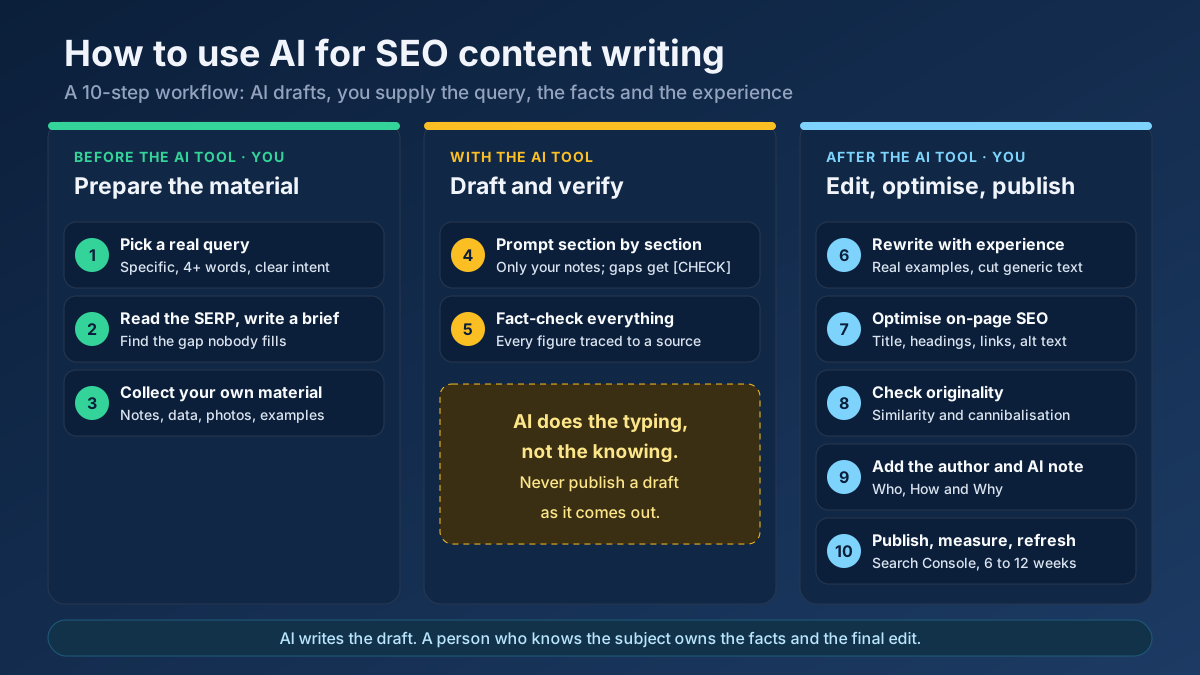 Content
Learn how to use AI for SEO content writing without risking a penalty: a 10-step workflow for briefs, drafts, fact-checks, editing and E-E-A-T signals.
Read article →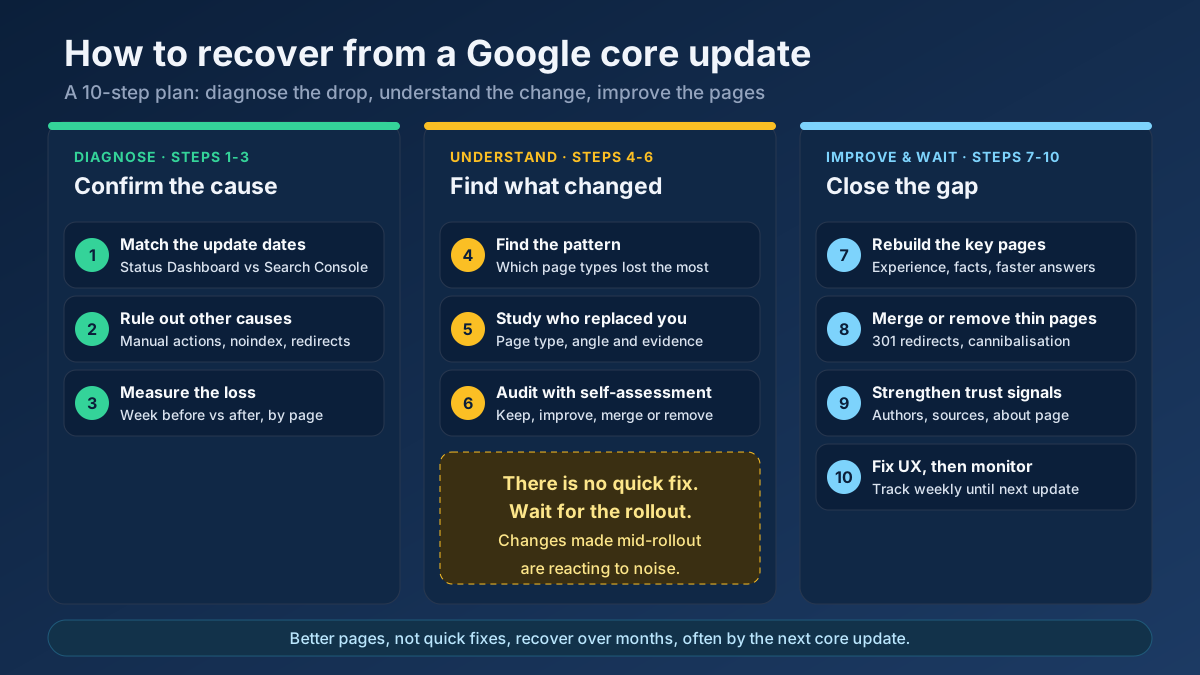 Analytics
Learn how to recover from a Google core update: confirm the drop, rule out technical issues, find the pages that lost and rebuild them in 10 clear steps.
Read article →Score how likely AI answer engines (ChatGPT, Google AI Overviews, Perplexity, Copilot) are to see, understand and surface your brand. Checks AI crawler access, brand-entity signals, structured data, citable content and llms.txt — out of 100 with a fix list.
Open tool →Measure how citation-worthy a page is for AI answer engines. Grades the signals LLMs use to quote and attribute sources — direct answers, statistics, outbound citations, author/date, schema and clear structure — with concrete ways to earn more AI citations.
Open tool →Score how easily large language models can parse, chunk and reuse your content. Measures sentence length, passage size, structure, jargon and ambiguity — the traits that make text easy for LLMs to extract clean answers from. Paste text or enter a URL.
Open tool →Check how optimized your site is for generative engines. Focuses on the GEO fundamentals — AI crawler access, llms.txt, brand-entity strength, structured data and quotable content — and estimates readiness for ChatGPT, Google AI Overviews and Perplexity.
Open tool →Grade how ready a page is to win AI answers and featured snippets. Analyzes answer-engine structure — question headings, concise self-contained answers, lists, tables, FAQ schema and a clear H1 — the format AI answer engines lift and cite.
Open tool →Find and grade the passages AI engines are most likely to quote — then get a rewritten, snippet-ready answer. Detects the best 40–60 word answer block, scores its snippet-worthiness and shows how to tighten it for AI Overviews and featured snippets.
Open tool →Your site may have a critical PHP vulnerability
PHP2Shell (CVE-2026-109618 and CVE-2026-109619) lets attackers run code on servers running PHP older than 8.2.35, 8.3.36, 8.4.27 or 8.5.12, without logging in. Attacks have been seen since 17 October. Check whether your site is affected.